
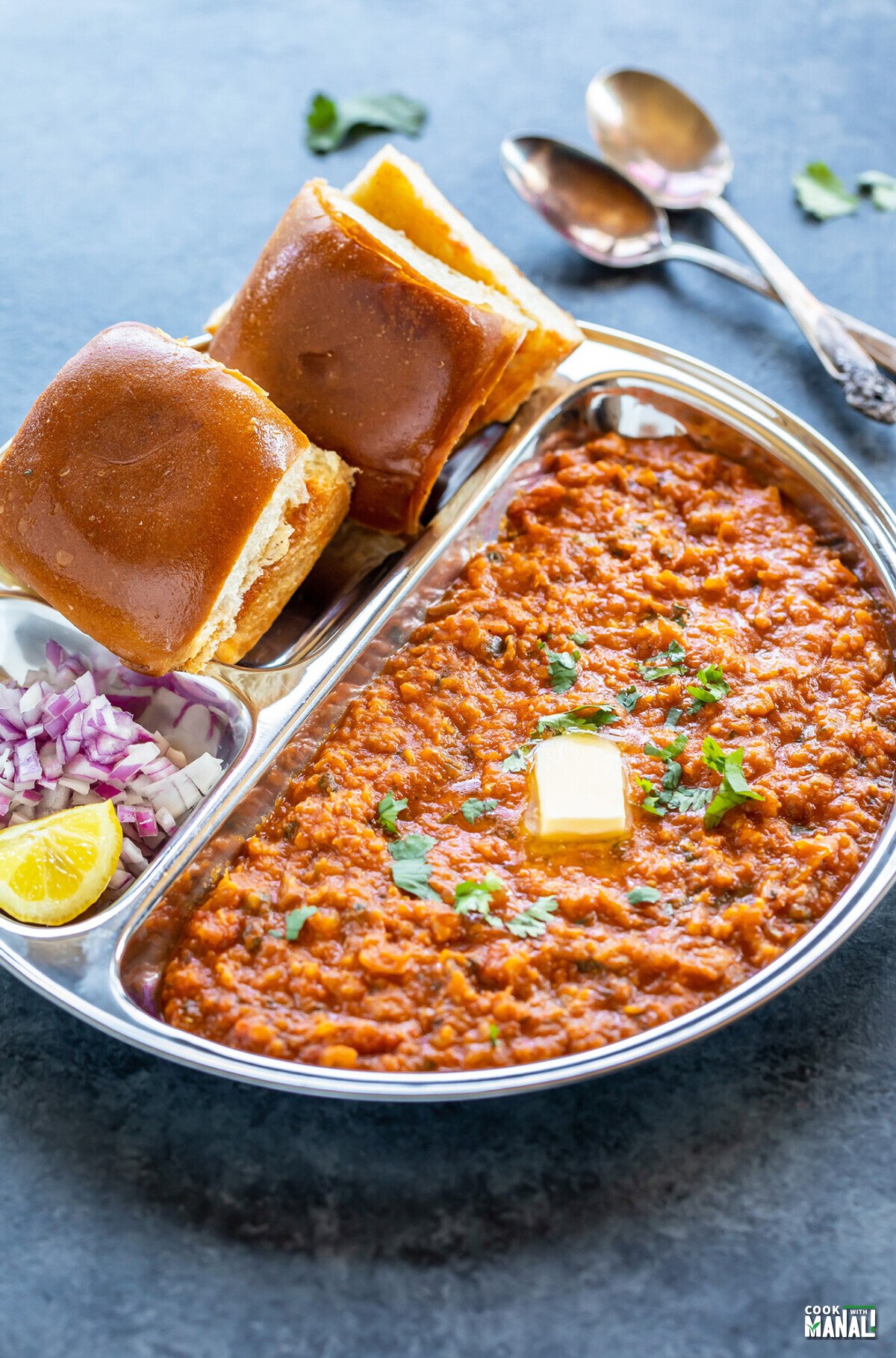
Pav Bhaji is popular Indian street food where soft dinner rolls/buns are served with spicy mashed veggies topped with dollop of butter. The bhaji (aka the mashed vegetables) is prepared with potatoes, cauliflower, carrots etc. and flavored with a special blend of spices known as pav bhaji masala. I love eating mine with lots of chopped onions and a good squeeze of lemon juice on top.

What makes good pav bhaji
Indian street food is my favorite kind of food. I can survive on eating spicy vada pav or my favorite samosa chaat and not get bored of it. Ever since I can remember, I have been a huge pav bhaji fan (and I will always be)! You can find it pretty much everywhere in India but if you want to taste the best pav bhaji, go to Mumbai!
That’s where this dish originated from and the one at Juhu Beach is so good, trust me! I ate pav bhaji all my life but I can still not forget the one I had in Mumbai. The flavors still feel fresh in my mouth.
A key to a good pav bhaji lies in the spice mix aka pav bhaji masala that’s used to flavor this dish. I love the one I make at home (you can find the recipe below). There are few other things that I swear about that are crucial to a good pav bhaji!
- Using lots of butter is essential in this recipe, I never serve mine without a dollop of butter on top.
- A generous squeeze of lemon juice before serving adds that pop of freshness to the bhaji.
- If possible, use fresh ginger-garlic paste in the recipe. I have made/tested this recipe with store-bought ginger garlic paste as well, and though it works okay, the aroma and flavor fresh ginger and garlic impart to the bhaji is unmatched.
- And finally enjoy it with lots of chopped onions and cilantro on top!

What goes in pav bhaji
There are 2 parts to this recipe – the pav and the bhaji.
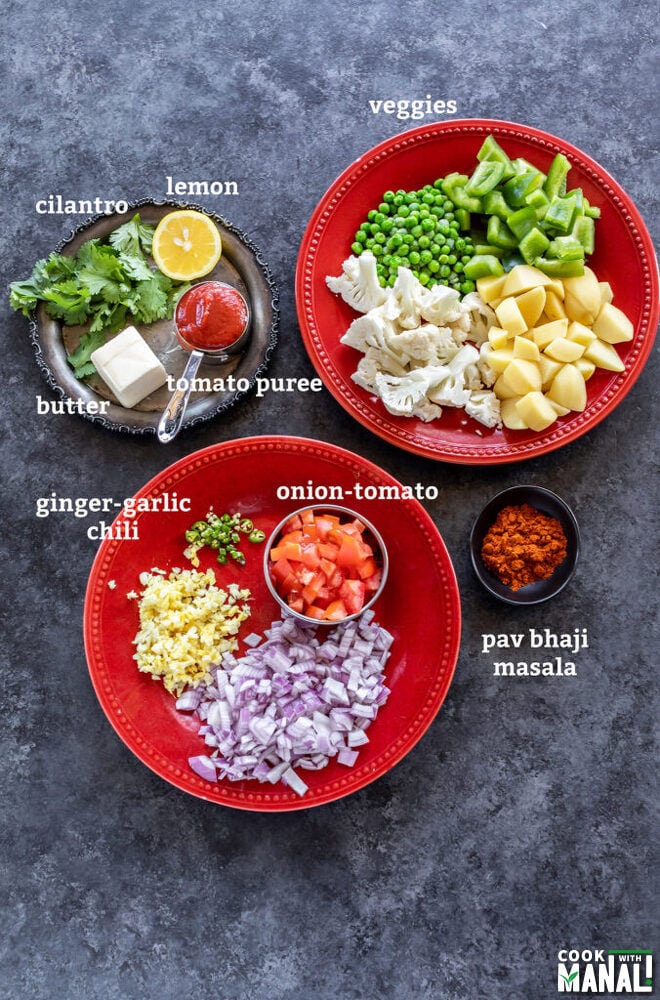
Ingredients for The Bhaji (other than basic staples like onion, tomato, ginger, garlic & green chili).
- Vegetables: bhaji is made with mixed vegetables and the most commonly used vegetables in pav bhaji are potatoes, cauliflower, green pepper, peas. Carrots, beets, beans are also commonly used.
- Pav bhaji masala: the main flavor in the bhaji comes from a special blend of spices known as pav bhaji masala. You can either get it from Indian grocery store (I like Everest) or make it at home (see recipe below).
The Pav: is basically eggless dinner rolls. You can find them at Indian grocery stores or you can also make them at home following the my recipe for homemade pav. If you can’t find pav and don’t want to make them at home either, here are your options:
- Regular burger buns
- Dinner rolls
- Hawaiian dinner rolls
How to make pav bhaji masala (homemade recipe)
You can get this masala easily at any Indian store. It’s a blend of spices like coriander, cumin seeds, fennel, cinnamon, amchur (dried mango powder) and more. I prefer Everest brand of pav bhaji masala, but you may use whatever you like!
To make pav bhaji masala, you would need:
- 4 tablespoons coriander seeds (20 grams)
- 2 tablespoon cumin seeds (18 grams)
- 5 dried red chilies (3-4 grams), adjust to taste
- 8 cloves
- 1 tablespoon fennel seeds (9 grams)
- 3 black cardamom
- 1 cinnamon stick, around 2 inches
- 1.5 teaspoon turmeric powder (6 grams)
- 2 teaspoon ground black pepper (6 grams)
- 1.5 tablespoon amchur (18 grams)
- ½ teaspoon ground ginger (1 gram)
- 2 teaspoon black salt (12 grams)
Dry roast coriander seeds, cumin seeds, dried red chilies, cloves, fennel seeds, black cardamom and cinnamon stick in a pan on medium heat until fragrant, around 3 to 4 minutes.
Let it cool and then transfer spices to a spice grinder. Stir turmeric powder, ground black pepper, amchur, ground ginger and black salt.
Grind until powdered and well combined. Store pav bhaji masala in an airtight container at room temperature and use as required. This makes around 100 grams of pav bhaji masala.
Let’s Make Pav Bhaji
- Cook the vegetables and start working on the masala base
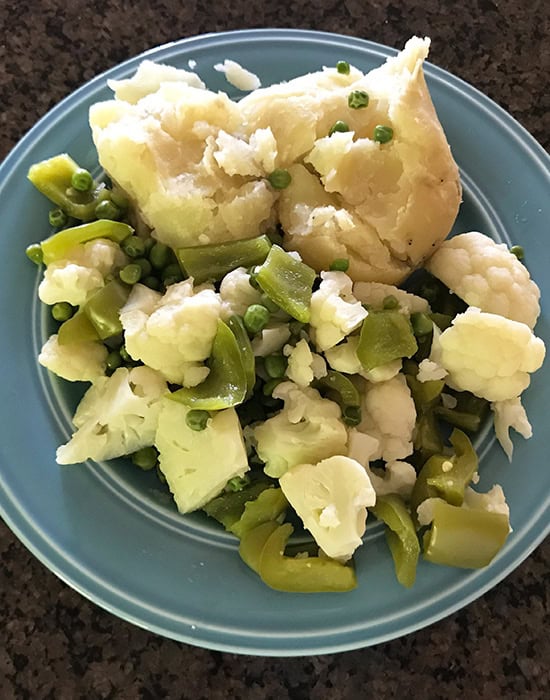
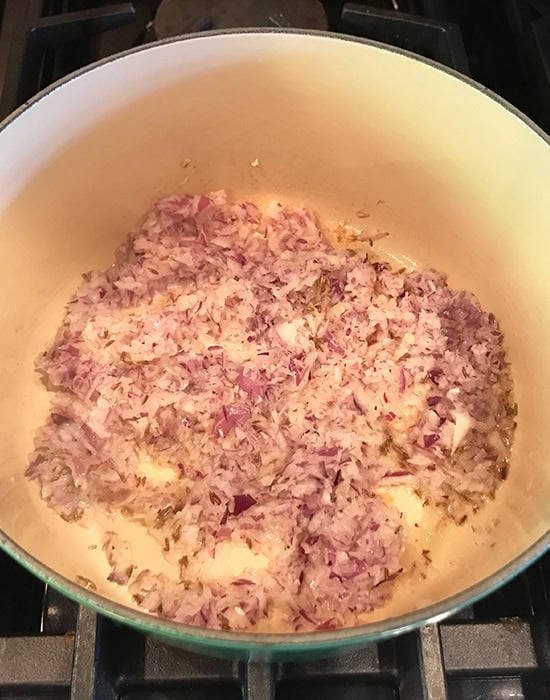
I like using potatoes, cauliflower, peppers and peas in my bhaji. You can also use carrots, beetroots, beans. For the masala base, sauté some cumin seeds along with onions first, I like using butter here for more flavor.
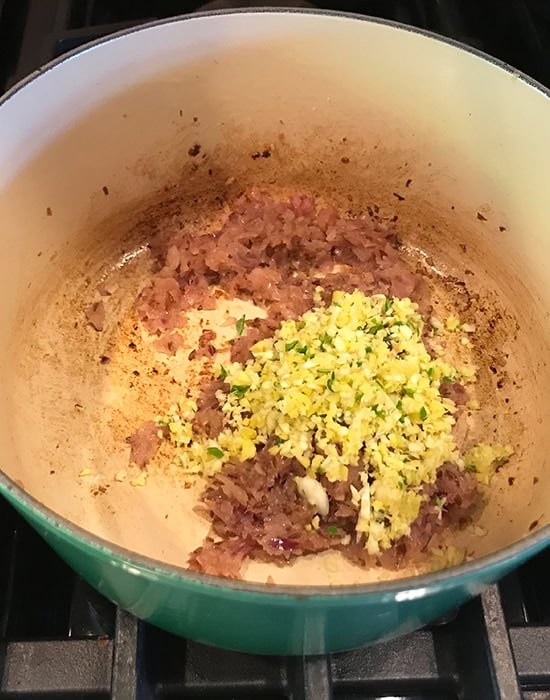
- Use freshly pounded aromatics
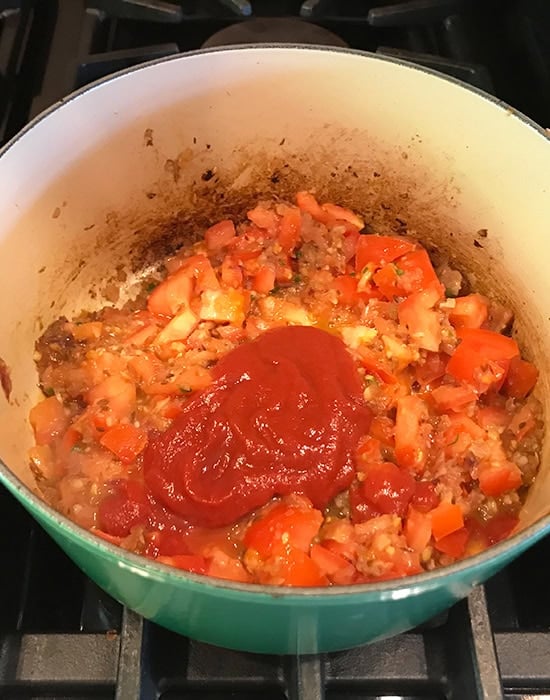
I like using fresh ginger and garlic in my pav bhaji for better flavor and aroma but store-bought paste also works. Cook the tomatoes with some tomato store-bought tomato puree for depth of flavor.
- Add the special blend of spices next!
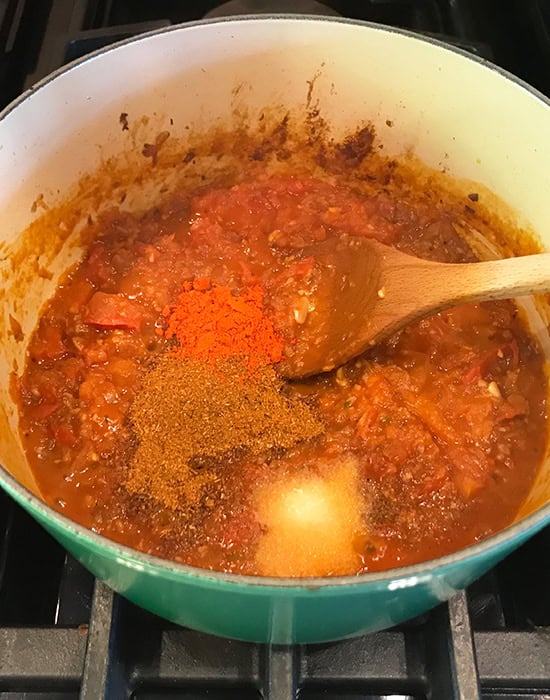
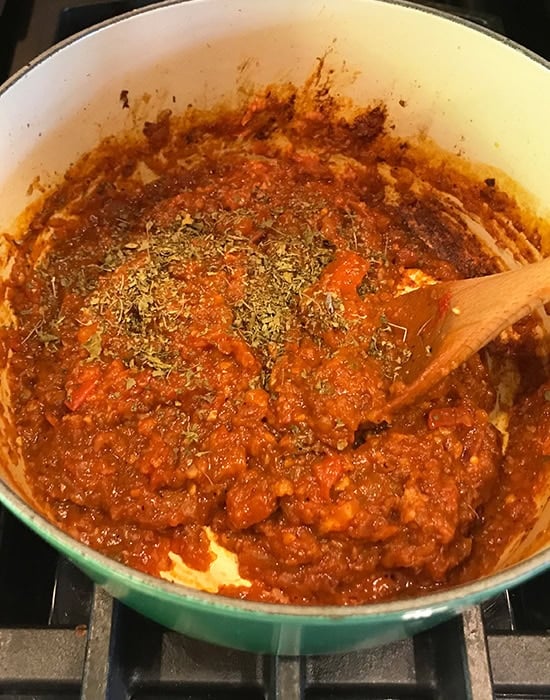
The special blend of spices is called the pav bhaji masala which you can make at home (recipe above in the post or buy it from Indian grocery stores). I also add some Kashmiri red chili powder for color.
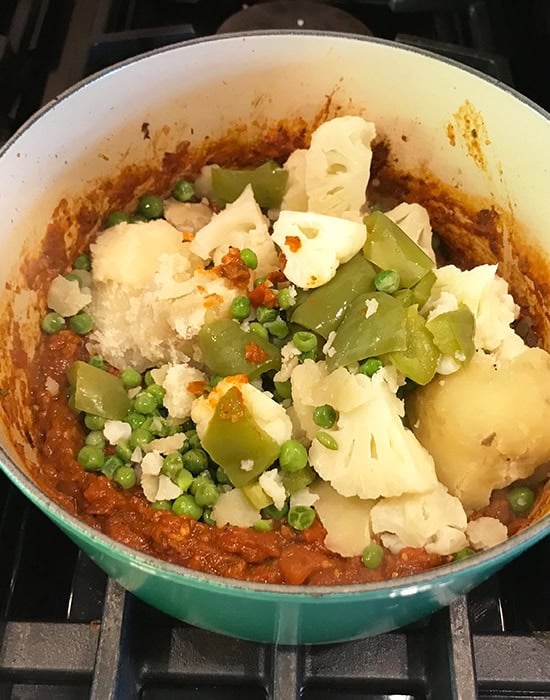
- The boiled vegetables go in next!
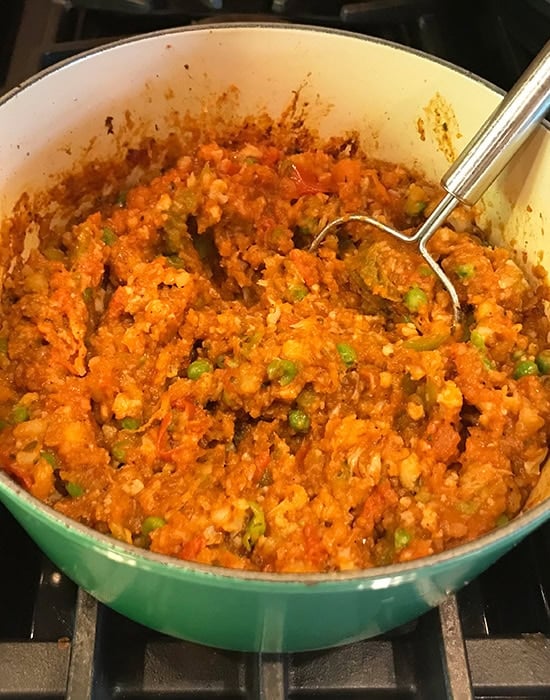
Once you have added the vegetables, mash them using a potato masher until they are well combined with the masala. The vegetables need to very soft so that they mash and mix in easily.
- Blending the vegetables is optional
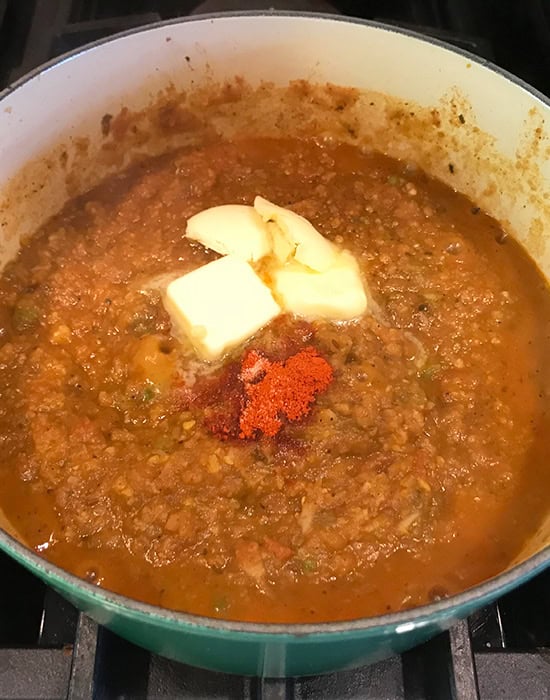
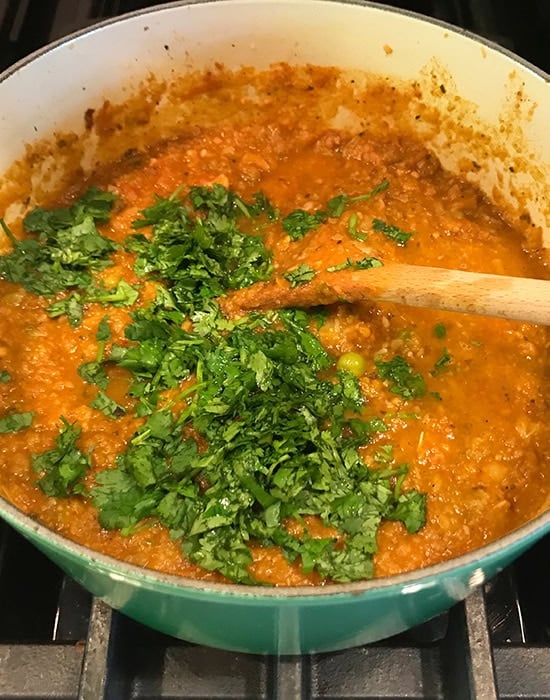
At this point, I add some water and then use any immersion blender to blend everything to a paste like consistency. You can also leave the vegetables as such. Let the bhaji simmer for about 15 minutes at this stage. And then add butter for that extra flavor!
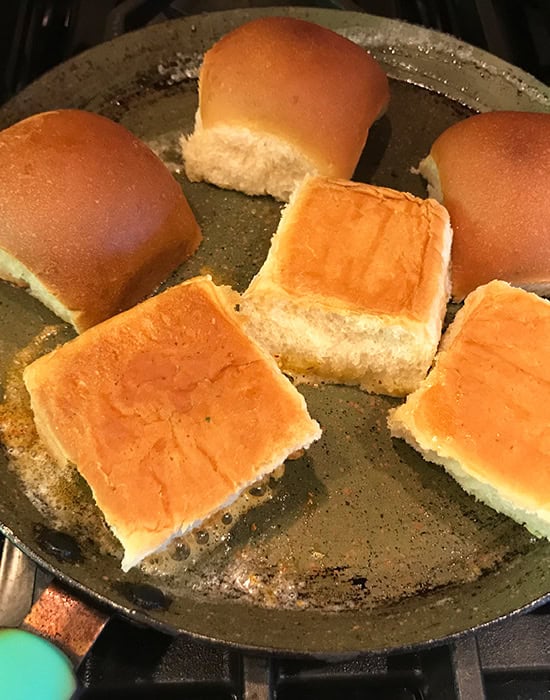
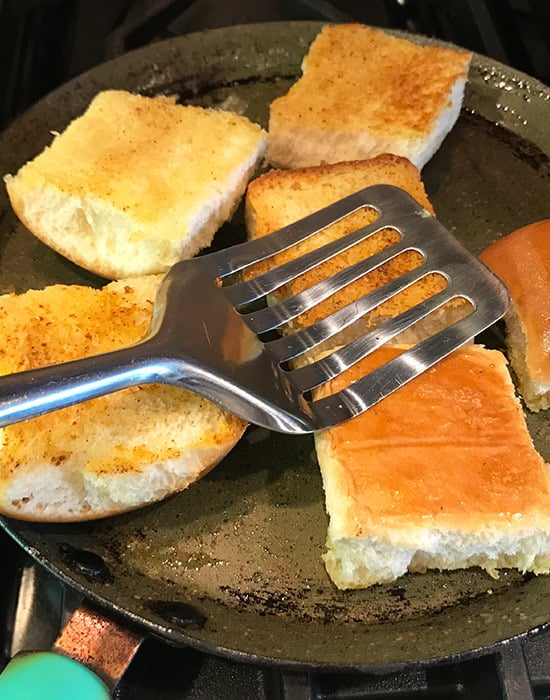
- Toast the pav (buns) for serving the dish
Use butter for toasting the buns. I also sprinkle some pav bhaji masala on top of the butter while toasting the buns. They are done once they are golden buttery and toasted.
And how do you serve it?
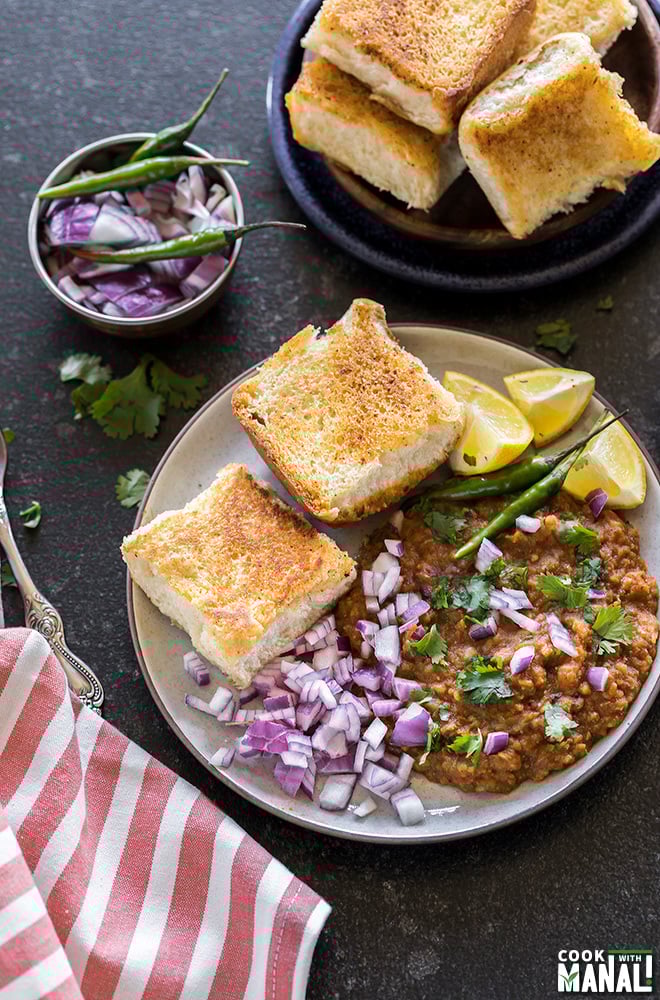
To serve the pav bhaji, place ladle full of bhaji on a plate. Top the bhaji with a dollop of Amul butter. Serve with 2 pavs and a side of chopped onions and a lemon wedge. I like to serve with lots of onions on the side.
Storage and Reheating
I do think pav bhaji tastes best when it’s freshly made however leftovers can be stored in the refrigerator for 2 to 3 days. I have never tried freezing the dish as I don’t have good experience with freezing anything with potatoes in it but some people do freeze it with success.
To reheat, use microwave or stovetop. If you think it has become super thick sitting in the fridge, you can add some warm water while reheating.
This post has been updated from the recipe archives, first published in 2014.
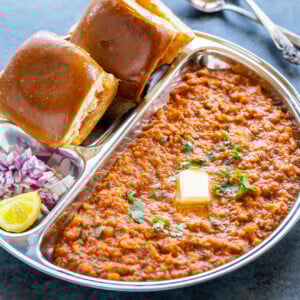
Pav Bhaji Recipe (Mumbai Style)
Ingredients
For the Bhaji
- 2 large potatoes, 385 grams , boiled
- ½ head cauliflower, 215 grams , boiled
- ½ of a large green pepper, 135 grams , boiled
- ½ cup frozen green peas, boiled
- 1 tablespoon vegetable oil
- 3 tablespoons butter, unsalted, divided
- 1 teaspoon cumin seeds
- 2 medium red onion, 230 grams , finely chopped
- 2 inch ginger, 24 grams , finely chopped
- 7 cloves garlic, 20 grams , finely chopped
- 2 green chilies, finely chopped, adjust to taste
- 3 large tomatoes, 425 grams , finely chopped
- ⅓ cup tomato puree, store bought
- 1&¼ teaspoon salt, divided
- 1&¼ cups water, divided
- 1 tablespoon + 1 teaspoon pav bhaji masala, or to taste
- 2 teaspoons Kashmiri red chili powder, not hot, used mainly for color
- ½ teaspoon red chili powder, or to taste
- 2 teaspoons kasuri methi, also known as dried fenugreek leaves
- 3 tablespoons chopped cilantro
- juice of 1 large lemon
For the Pav
- 12-14 pav, eggless dinner rolls
- butter, to toast the pav
- pav bhaji masala, to sprinkle
Instructions
Make the Bhaji
- The first thing you need to do is cook your vegetables and keep them ready. I used 2 large potatoes (385 grams), ½ head of a small cauliflower (215 grams), ½ green pepper (135 grams), and ½ cup green peas (frozen). I used my pressure cooker to boil them until they were soft and tender, you can also steam the vegetables using a steamer.
- Now, heat 1 tablespoon oil and 1 tablespoon butter in a large pot on medium heat. Once the butter melts and oil is hot, add 1 teaspoon cumin seeds and let them sizzle.
- Add 2 medium red onions (chopped) and mix. I like to use my food processor to chop them fine. Cook the onions for around 4 minutes until golden they are golden brown in color.
- Then add 2-inch ginger (finely chopped), 7 large garlic cloves (finely chopped) and 2 green chilies (finely chopped). Again, I used my food processor to chop them fine. Cook the ginger-garlic-green chili for 1 minute.
- Now, add 3 large tomatoes (chopped) and mix well. Let the tomatoes cook for 2 minutes. Add ⅓ cup tomato puree (store bought), ¼ cup water and ¼ teaspoon salt. Cover the pan and let the tomatoes cook for 6 minutes until softened and completely cooked.
- Add 1 tablespoon +1 teaspoon pav bhaji masala, 2 teaspoons Kashmiri red chili powder, ½ teaspoon red chili powder and remaining 1 teaspoon of salt. You may also add ½ teaspoon of sugar here (optional).
- Mix well and then add in 2 teaspoons kasuri methi (dried fenugreek leaves).
- Stir in the boiled veggies and mix. Using a potato masher, mash the veggies until they are completely mixed with the masala. Add the remaining ¾ – 1 cup water and mix. I used an immersion blender to blend the veggies to a paste like consistency at this point but this is optional. You may keep them as such.
- Cover the pot and set heat to low. Let the bhaji simmer on low heat for 15 minutes. Then open the pot and add in the remaining 2 tablespoons butter and 3 tablespoons cilantro (chopped).
- Finally add in juice of 1 large lemon. Let the bhaji simmer for 2 more minutes and then remove pan from heat.
Toast the Pav
- To toast the pav, melt butter on a pan on medium heat (around 1 teaspoon butter for each pav). Sprinkle some pav bhaji masala on top of the butter and then place the buns on the pan. Press to toast the pav until crisp and golden brown from both sides.
Serve the Pav Bhaji
- To serve the pav bhaji, place ladle full of bhaji in a plate. Top the bhaji with a dollop of butter. Serve with 2 pavs and a side of chopped onions and a lemon wedge.
Video
Notes
- To make it vegan, replace butter with vegan butter.
Nutrition
Nutrition information is automatically calculated, so should only be used as an approximation.










Just tried this recipe as my daughter was craving some pav bhaji. It turned out very nicely if I may say so myself 🙂 This one is a keeper. Thank you!
My friend now husband introduced me to Pav bhaji when we were in university. Once I moved, I searched for it anytime I went to an Indian restaurant and couldn’t find it. I searched the internet and found this recipe. I’ve been making it for around 7 years and have passed it on to many people. It’s delicious! I’ll prefer the masala recipe over any store bought version. Try it out, you won’t be disappointed!
Thanks Victoria for the feedback, glad you enjoy this recipe!