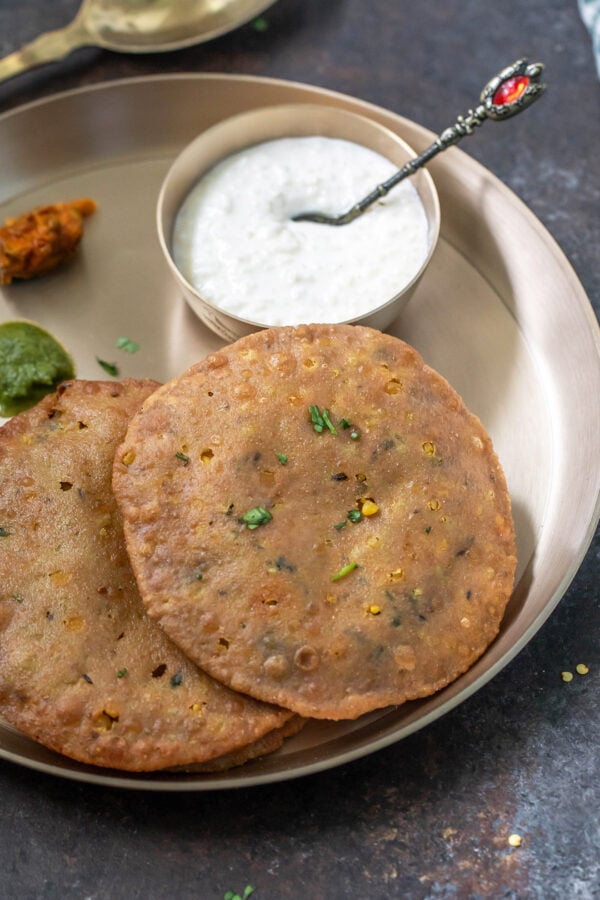
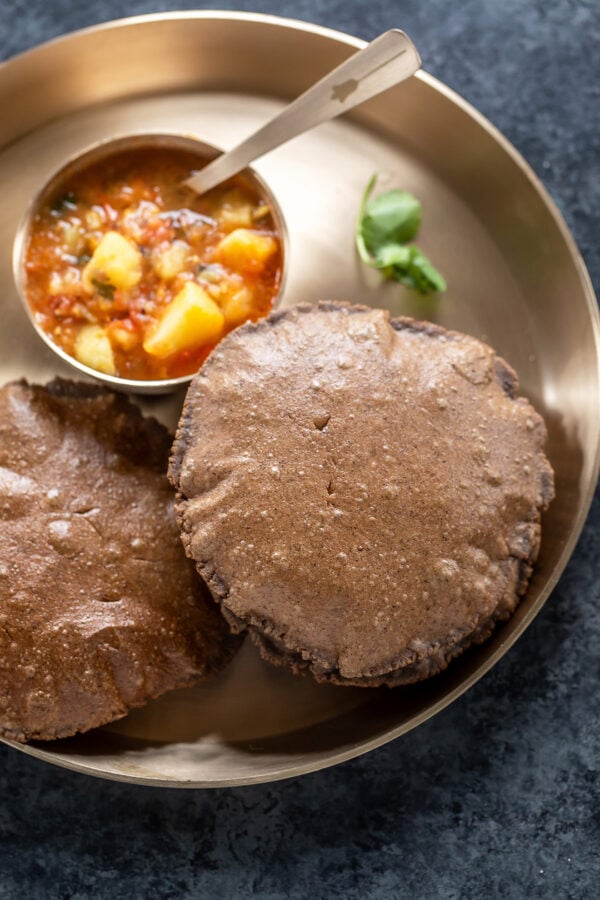
Sattu paratha was my favorite paratha growing up. My grandmother (nani) used to make the best sattu parathas which we would relish with creamy rice kheer. It was the best kind of comfort meal, especially during winters.
Sattu is roasted chana flour and very commonly used in states of Bihar and eastern Uttar Pradesh. My family is from eastern UP, so I grew up consuming a lot of sattu in different forms- parathas, drinks and litti chokha! Out of all of these, sattu parathas are my favorite. Whole wheat dough is stuffed with a spicy and tangy filling made with sattu, chopped onions, chilies, and achar masala and honestly you don’t even need an accompaniment for this paratha.
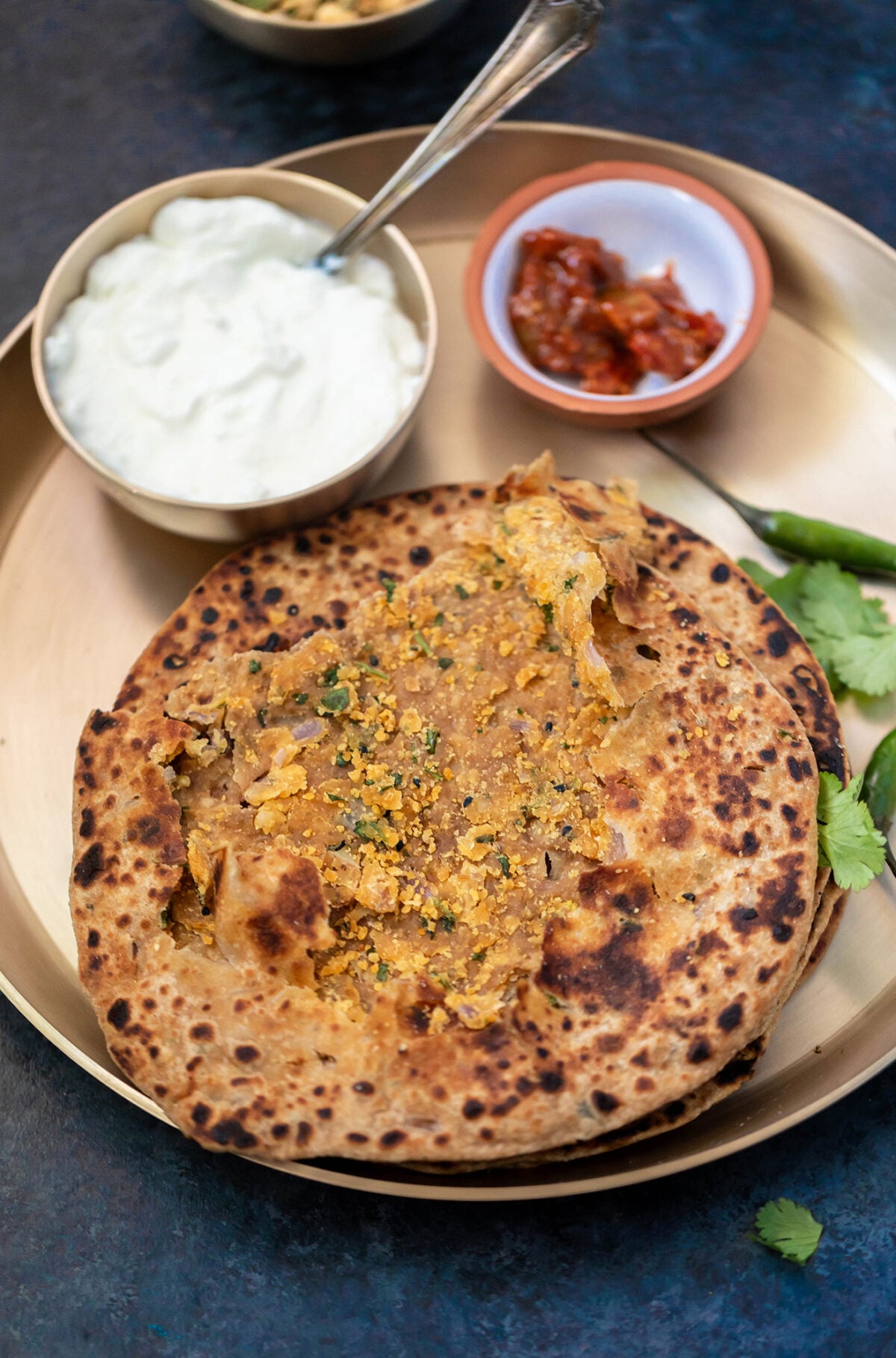
When I first met my husband, I told him my favorite paratha was “sattu paratha”. He was born and raised in Delhi and he had a blank expression when he heard that. His favorites were aloo paratha, gobi paratha and he had never heard of “sattu”. His next question was, what in the world is sattu?!
Sattu is basically flour made from roasted chana. It’s a very region specific ingredient in India and so I wasn’t surprised when my Delhi born and raised husband had not heard of it. Out of all the things that we can make with sattu, paratha was a regular at my place. My mom often made it for dinner and would serve it with chilled creamy rice kheer. It’s such a nostalgic combination for me that till date when I make sattu paratha in my kitchen, I end up making kheer as well! Other eastern UP food that takes me straight to my childhood has to be my nani’s one-pot tehri and her matar ka nimona (so good with steamed rice with ghee on top)!
Tips For A Good Sattu Paratha
The basic tips which you need to make any good paratha holds true for this paratha as well. Like making a soft dough, let the dough rest for 20 to 30 minutes before rolling it, making sure the tawa is hot before you put the rolled paratha on it and so on.
However, there are few things special to sattu paratha.
- You cannot skip mustard oil in this paratha, it’s peculiar aroma and taste is unique to sattu paratha and using any other oil here just won’t work.
- Using achar ka masala/pickle masala is also important. When I was little, mom always used my nani’s lal mirchi achar ka masala (my grandma’s red chili pickle). It was honestly the best pickle and the masala from that achar worked perfectly in the filling. Now that I don’t have access to it, I use masala from any store-bought achar, sometimes it’s the mixed achar, sometimes it’s the mango achar.
- Make sure the stuffing isn’t too dry, it used to irritate me as a child when sattu was all over my plate while I ate the paratha! So, I add a little water to make sure my stuffing is a little moist and doesn’t scatter all around when you eat the paratha.
Let’s Make Sattu Paratha
- Make a soft dough
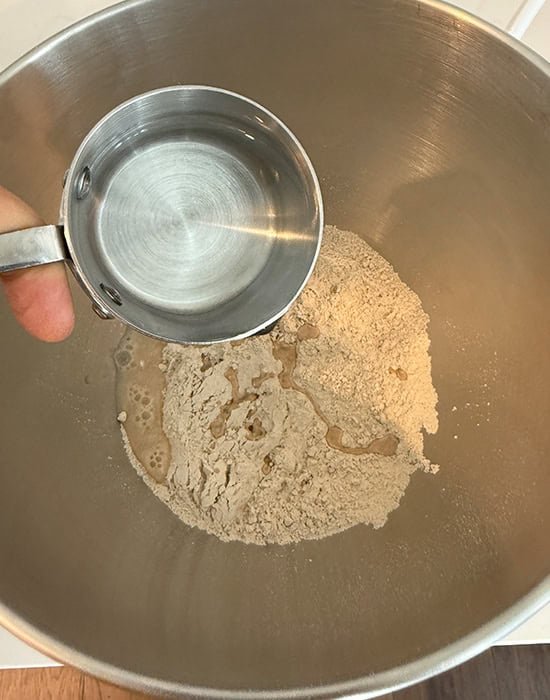
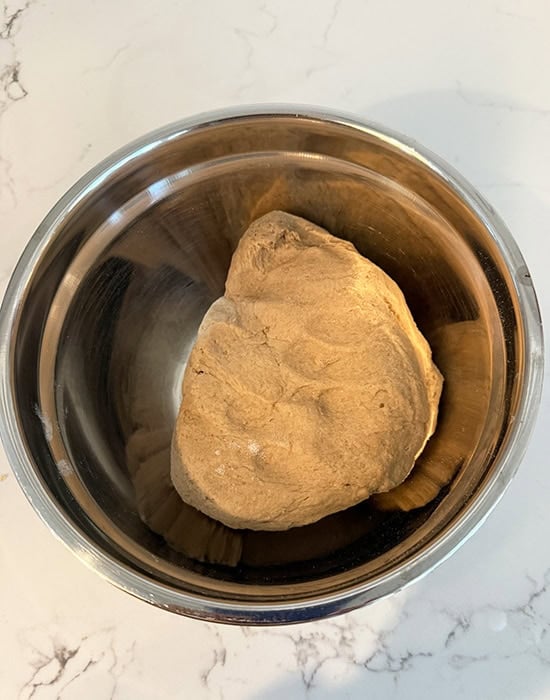
For the parathas, knead a soft paratha dough by adding some salt and a little bit of ajwain to it. For 2 cups of atta, I end up using approximately 1 cup of water, you may need more or less depending on the quality of atta that you are using. Cover and let the dough rest for 20 to 30 minutes.
- Work on the sattu filling
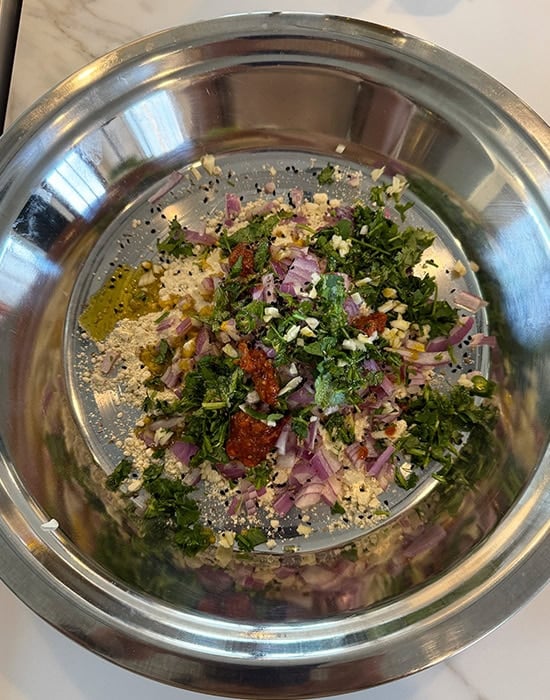
The filling is very easy to make- just some sattu, with chopped onions, cilantro, garlic. Mustard oil and achar (pickle) masala are the special ingredients in this filling and cannot be replaced or avoided for that authentic taste.
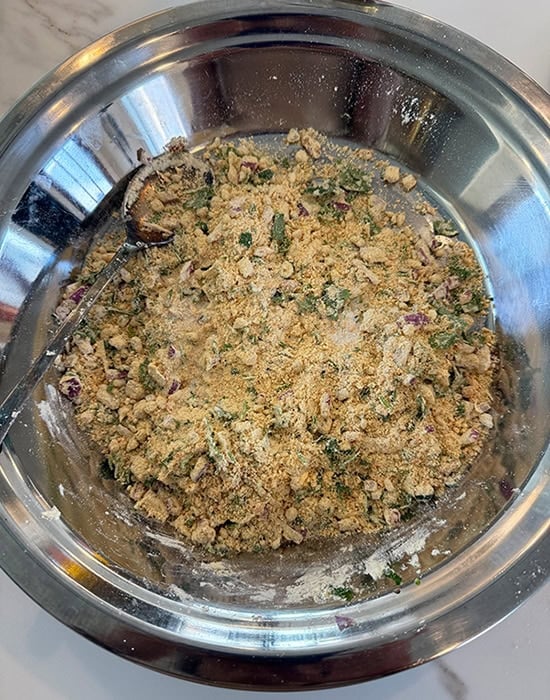
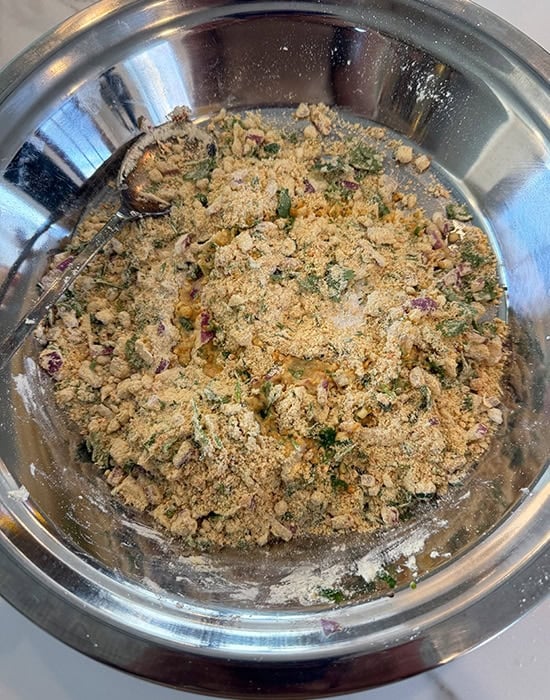
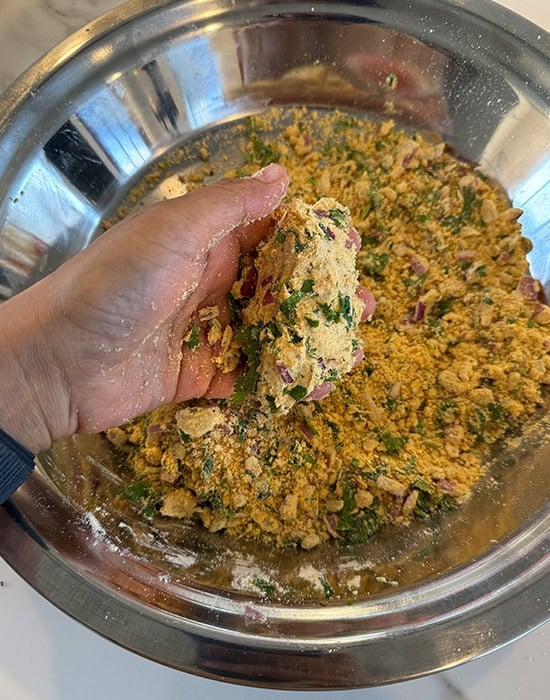
- Filling should bind when pressed
One of the problems I personally had while eating sattu paratha as a kid was that the filling would be all over my plate when I ate it. Sure, it’s hard to prevent that since we are filling a “flour” inside the paratha but adding some lemon juice and a little water to make it slightly moist helps.
- Start rolling the paratha
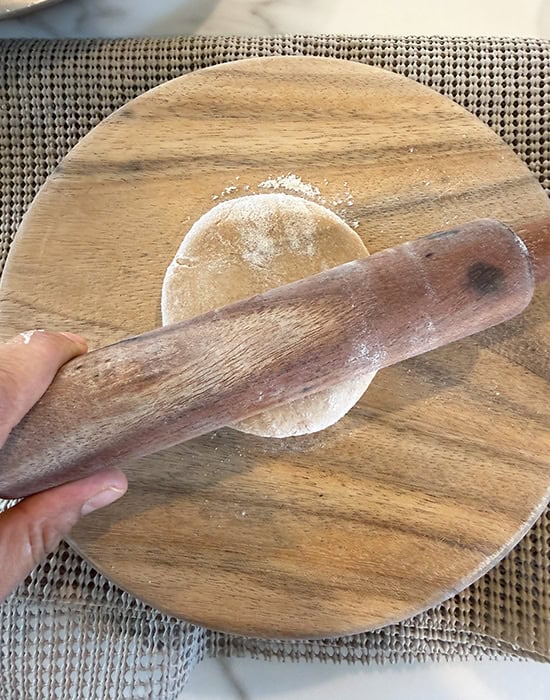
Divide the dough into dough balls of around 60 grams (or as big or small parathas as you like). Make the dough ball smooth and then start rolling it with a rolling pin. Once you have rolled into a 4-5 inch round, apply some oil (or ghee), this is optional but results in softer parathas.
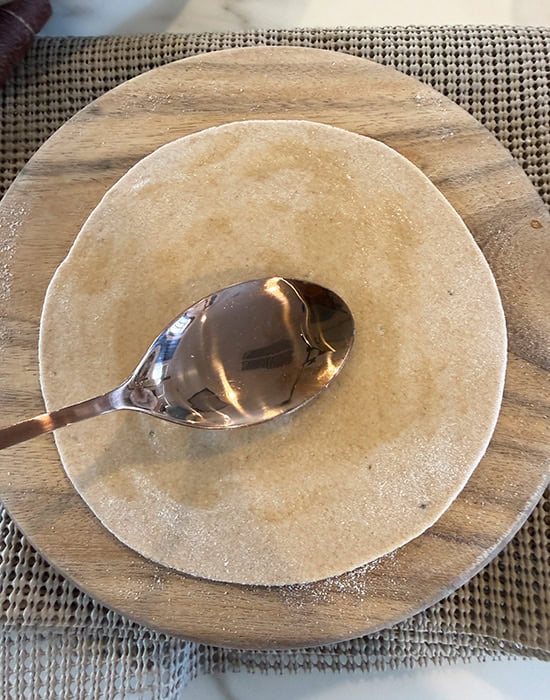
- Stuff with the prepared filling
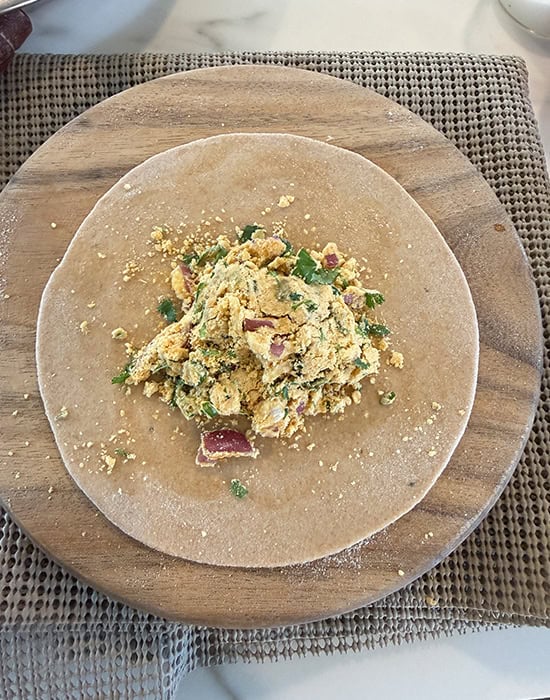
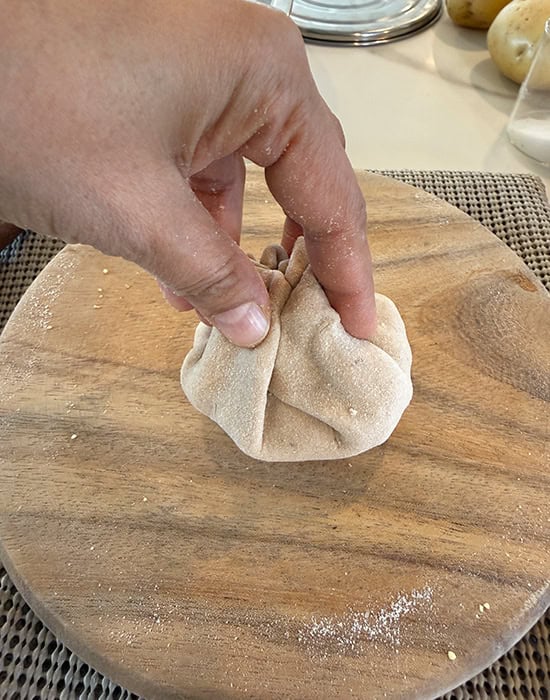
I like adding 2 to 3 heaping tablespoons of sattu filling in the center. It’s important for sattu paratha to be stuffed well (it is true for every paratha though!). Pinch the edges to seal the paratha.
- Roll the paratha again
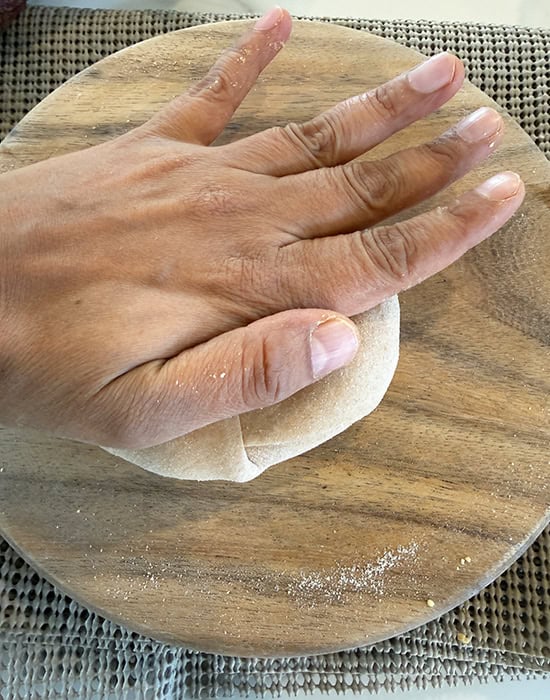
Press the paratha with your palm to flatten it, this helps in distributing the filling. Now, roll with a rolling pin again to a 7 to 8 inches circular, round paratha.
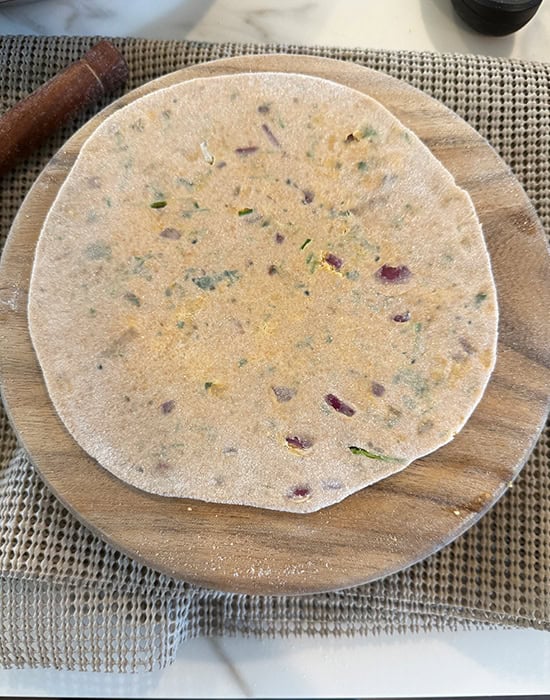
- Cook the paratha
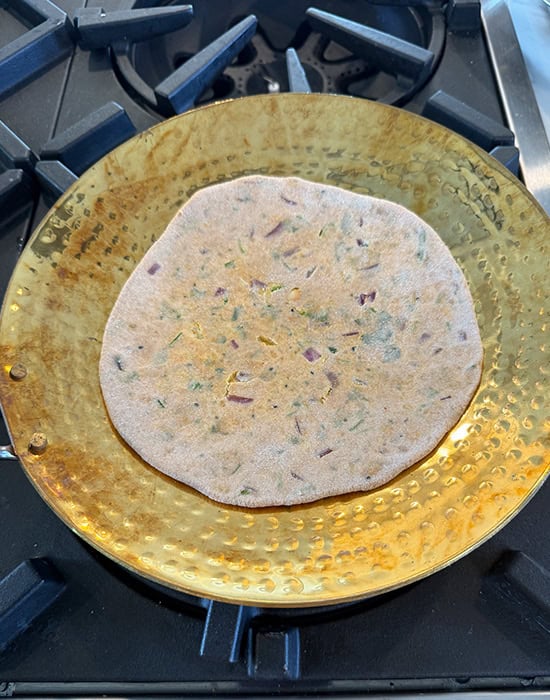
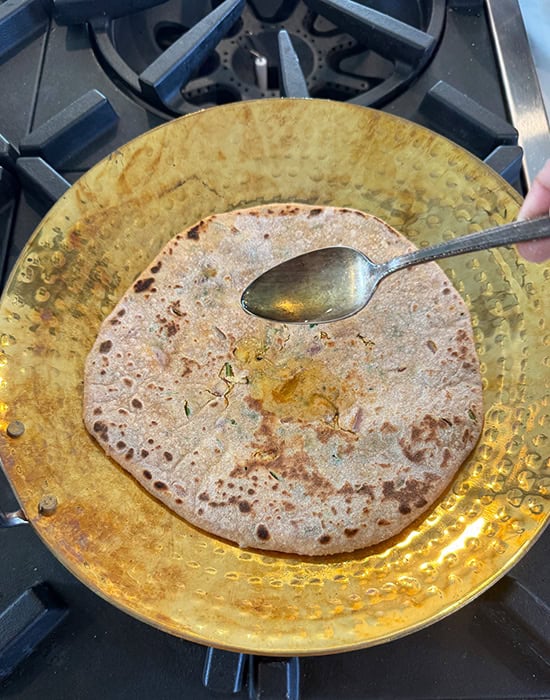
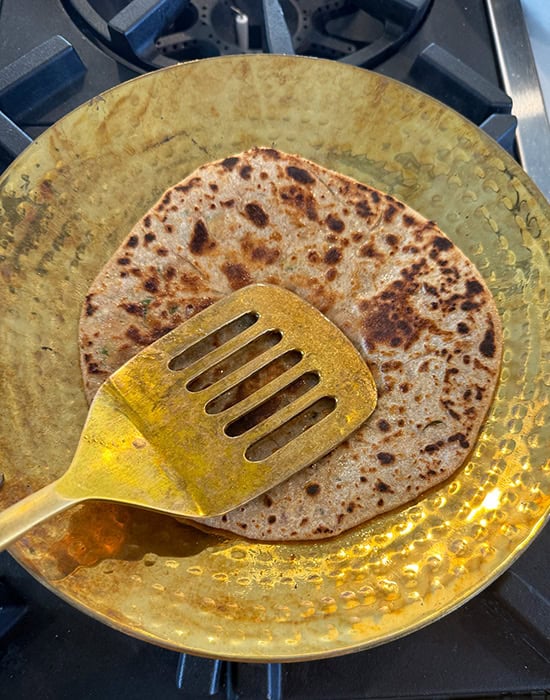
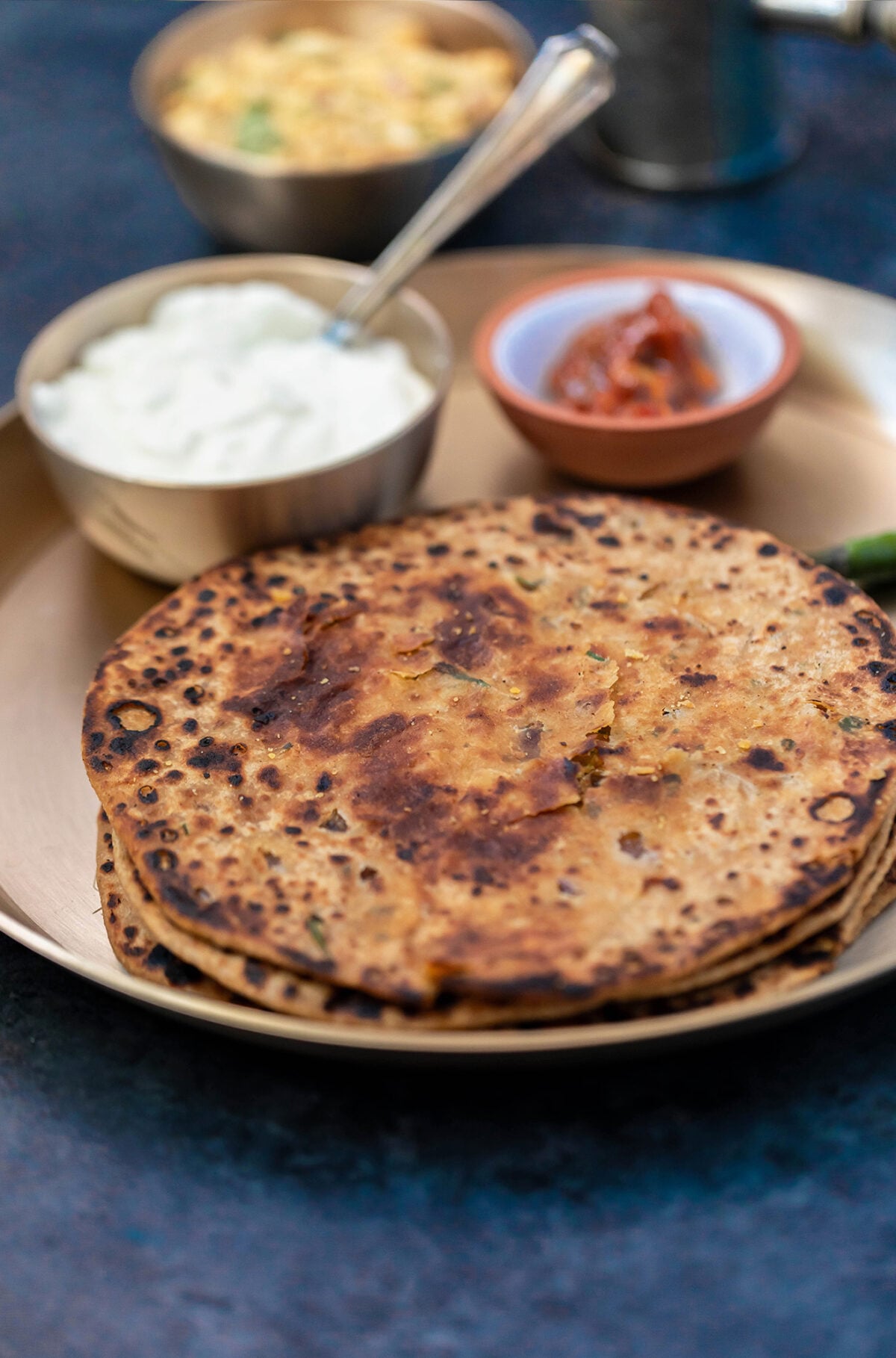
You can use either oil (will keep it vegan) or ghee to cook the paratha. Make sure that the tawa is really hot before you add the rolled paratha to it. Cook until golden brown and cooked through from both sides. Serve hot with yogurt.
Re-heating & Storage
Leftover parathas can be warmed in the microwave or hot tawa. If heating them up in the microwave, wrap them in a damp paper towel and microwave 30 seconds, add more timing as needed. To heat on stove-top, heat the tawa on medium-high heat until it’s hot, then place the paratha on it and reheat, 30 seconds each side.
My mom would often make sattu parathas for our train journeys, that’s because they don’t go bad at room temperature for an extended period of time. The stuffing is flour so it doesn’t go bad. If you skip the onion, you will extend the shelf life even more. They will be good in the fridge for up to 5 to 7 days and at room temperature for 3 days.
Authentic Sattu Paratha Recipe
Ingredients
For the dough
- 2 cups atta, 260 grams
- ½ teaspoon salt
- ¼ teaspoon ajwain, carom seeds
- 1 cup water, 8 oz , approx., you might need more or less
For the stuffing
- ½ cup + 2 tablespoons sattu, 150 grams
- 1 small onion, finely chopped
- 2 green chilies, chopped, or add more to taste
- 3 tablespoons cilantro, chopped
- 2 teaspoons garlic, minced
- ¼ + ⅛ teaspoon ajwain
- ¼ + ⅛ teaspoon kalonji
- 2 teaspoons lemon juice
- ½ teaspoon salt
- 1 tablespoon + 2 teaspoons mustard oil
- 1 tablsepoon pickle masala, achar masala from your favorite achar
- 1 & ½ tablespoon water, to wet the stuffing
- oil or ghee, to cook the parathas
Instructions
Make the dough
- To a large pan/paraat, add 2 cups atta, ½ teaspoon salt, and ¼ teaspoon ajwain. Mix the ingredients using a wire whisk or your fingers. Start, adding water to the flour and bring it all together into a dough. Now, knead the dough for around 7 to 8 minutes by hand- until it's soft and smooth or you can also use your food processor or stand mixer. I often use my stand mixer and knead for around 5 minutes on medium speed using the dough hook attachment. I used around 1 cup water to knead this dough, you might need a little more or less, this depends on the quality of atta that you are using.The final dough should be soft, it should be not be tight. Now, transfer the dough to a bowl and cover it with a lid and let it sit for 20 to 30 minutes.
Make the stuffing
- Work on the filling while the dough is resting. Take a large bowl and to that add ½ cup + 2 tablespoons sattu (150 grams), 1 small onion (chopped), 2 green chilies (finely chopped), 3 tablespoons chopped cilantro, and 2 teaspoons garlic (minced).
- Add ¼ + ⅛ teaspoon ajwain, ¼ + ⅛ teaspoon kalonji, 2 teaspoons lemon juice, ½ teaspoon salt, and mix well using a spoon or whisk. Then add 1 tablespoon + 2 teaspoons mustard oil and 1 tablespoon achar masala. I use mango or red chili achar ka masala usually but you can use the masala from any achar that you like. Mix everything well. Then add a little water so that the filling is a little moist, it already isn't very dry since there moisture from oil, achar masala, lemon juice but I felt it needed some more moisture so I added around 1 & ½ tablespoon water and mixed. You can add less as needed. Press the filling between your palm, it should hold the shape.
Roll & Cook the paratha
- Divide the dough into dough balls of 50 to 60 grams each. Keep all the dough balls covered while you work on making a paratha else the dough will dry out. Roll one dough ball to a smooth round, it should not have any cracks.
- Roll the dough balls into dry atta and then start rolling it using a rolling pin and rolling board (or roll on your counter). Roll by applying equal pressure and once you have rolled it into a 3-4 inches circle, apply some oil of ghee (this is optional but keeps the paratha more soft from inside). Place around 3 tablespoons of the prepared sattu filling in the center.
- Bring the edges of the rolled dough together and pinch to seal the paratha. Now press it down using the palm of your hands and press gently to distribute the sattu filling.
- Roll again gently and applying equal pressure, using your rolling pin into to 7 to 8 inches diameter round paratha. Heat a tawa on medium-high heat. It's important for the tawa to be really hot before you place the rolled paratha on it else the paratha dries out and doesn't turn as soft.
- Place rolled paratha on the hot tawa and let it cook for around 1 minute until you see some bubbles on top. Now, flip and let the second side also cook for around 30 seconds. Now, apply around ½-1 teaspoon of oil or ghee on the first cooked side. Spread oil all over the paratha using a spatula. Flip the paratha again and apply similar amount of oil or ghee on the second side as well. Press the paratha with a spatula especially pressing the center and the edges so that they don't remain uncooked. Flip and do the same with the other side as well. Paratha is done when it's nicely golden brown from both sides.
- Make all parathas similarly. Enjoy with yogurt!
Notes
- Leftover sattu filling (if any) can be stored in the fridge for up to 4-5 days easily. I honestly sometimes just eat it with a spoon. It’s great with chai!
Nutrition
Nutrition information is automatically calculated, so should only be used as an approximation.