
With this step-by-step samosa recipe, you will be able to make the perfect crispy and flaky samosa right in your kitchen. These potato samosas are filled with a spicy potato filling and are also vegan. I grew up in India, eating a lot of samosas, there were street vendors selling samosa at literally every corner of my hometown.
Whenever we had guests over for evening chai, my mom would always make onion pakora and order samosa from the street vendor. Honestly, we didn’t make too many samosas at home growing up, because literally they were available everywhere but once I moved to the US and started missing the samosas I enjoyed in India, is when I got into learning the tips and tricks behind making the perfect samosa.
Over the years, I have played around with this recipe and experimented several times to come up with an easy, foolproof recipe. I also learnt a few tricks from a street vendor during one of my India trips where he was gracious enough to share his knowledge with me. This is one of those treats that you should make for special occasions or over a weekend when you want to have some fun in the kitchen because it does take some time to put it all together.
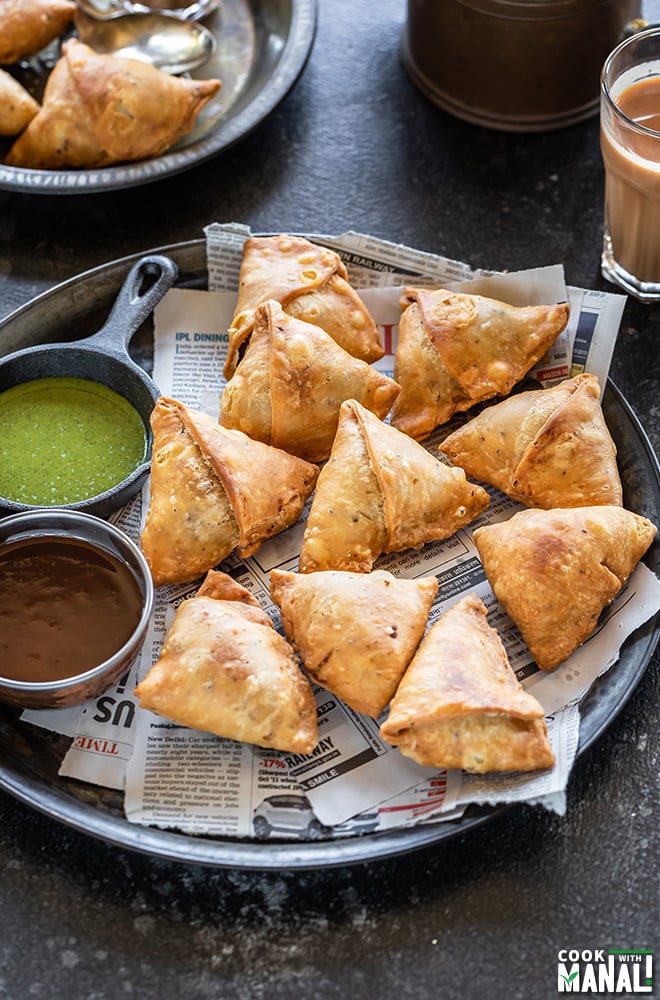
Popular Indian snacks are often deep fried like pakora, kachori, and of course samosa! I love traditional deep-fried samosa; nothing beats munching on a good crispy samosa on a rainy evening with a cup of chai. But over the years, I have also baked samosas in the oven, made them with puff pastry and even air fried them. However, I always keep coming back to this traditional samosa recipe simply because there’s nothing quite like it.
Because samosa is so popular in India, I always assumed samosa was an Indian dish. Only later I read that it has its origin in Middle East and it was introduced to India during the Delhi Sultanate rule. It was later adapted as a vegetarian snack with spicy potato filling in India and thus aloo/potato samosa became the most widespread snack in India
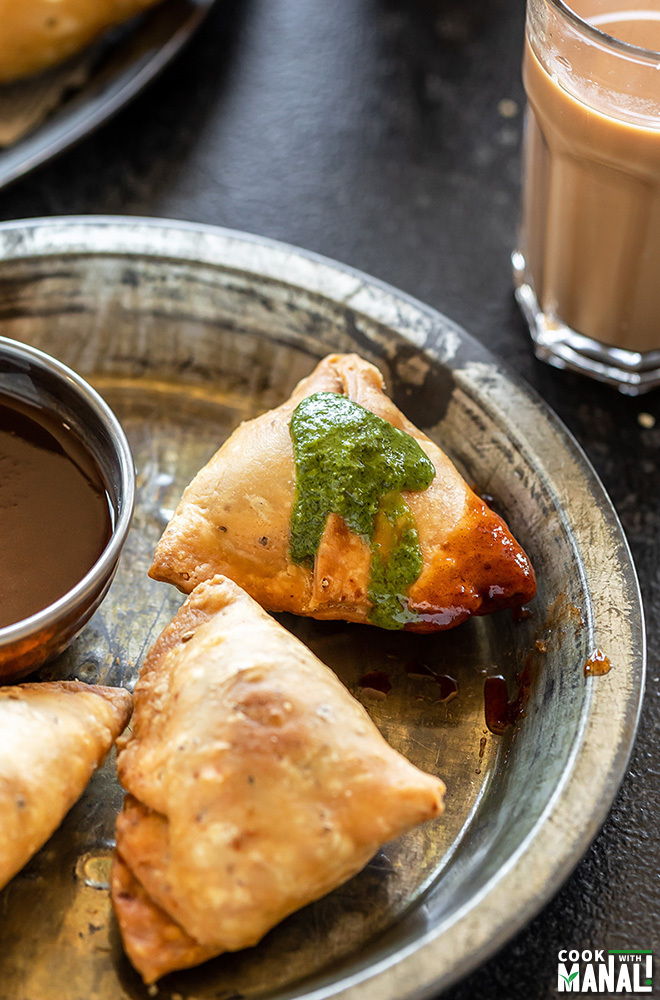
I like adding peas to my samosa, if you don’t like it, you may skip it. But what you can’t skip is dunking hot samosa into spicy green chutney and sweet and sour tamarind chutney.
Tips to Make the Perfect Samosa
Here’s what I have learned over the years experimenting with making samosa in the kitchen and I am excited to share all my tips with you guys to make the perfect samosa at home!
Fry the samosa on low heat – the most important thing first- always fry the samosa on low heat (around 285 F degrees), that way they will turn crisp. Once they have become light brown in color and their crust is firm (after 10 minutes or so), then you can increase the heat and fry on medium heat.
- Mixing the oil with flour is important– rub the oil with the flour using your fingers for a good 3 to 4 minutes, this incorporates the oil well into the flour and makes the dough flaky.
- Don’t overwork the dough– you only need to bring the dough together. If you overwork it, and knead it a lot, the samosas will turn out hard.
- Dough should be stiff– soft dough will not give crispy samosa.
- Let the dough rest for around 40 minutes– always remember to let the dough rest for at least 30 to 40 minutes before you start making the samosa. A relaxed dough is much easier to work with.
- Roll the dough evenly and roll it thin–roll the dough thin for that crunchy samosa with thin edges- ideally around 1/16-inch or less and roll it evenly.
- Do not use any flour while rolling the samosa, you can apply little oil on your rolling pin.
Troubleshooting common Samosa problems
Why is My Samosa Not Crispy?
This happens when you fry the samosa in hot oil. You need to fry the samosa on low heat always, around 285-300 F degrees. Once the outer coating becomes firm, you can then increase the heat to medium at fry at 320-350 F degrees.
Another reason is that your dough wasn’t stiff enough. The dough should be pliable but stiff, it should not be soft like roti dough. It’s your dough is soft, you samosa will be soft as well.
Samosa isn’t flaky enough
The way to fix this problem is to make sure that the oil is well incorporated into the flour. Rub the flour with oil using your fingers for 2 minutes and they will be flaky/khasta (as we say in hindi).
Samosa crust has bubbles on top
This happens from dropping them in hot oil, drop the samosa in oil on low heat. That will prevent the formation of bubbles.
How to Make Samosa (from scratch)
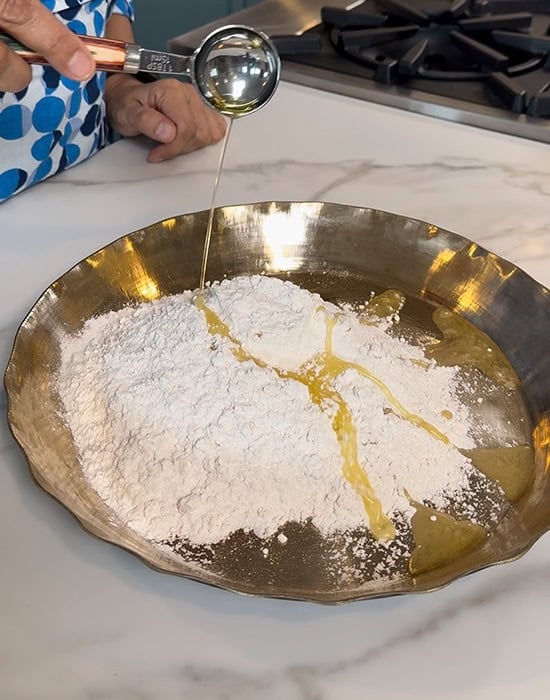
- Start making the dough
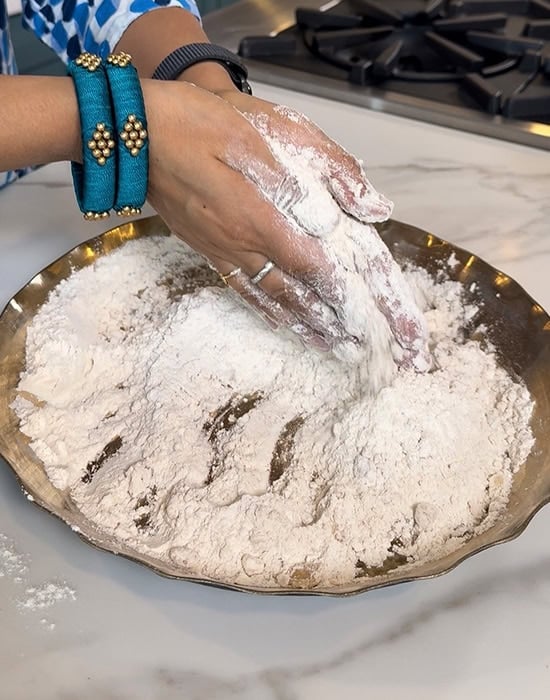
After adding the oil, rub the oil with your fingers into the flour, this is an important step for flaky samosa.
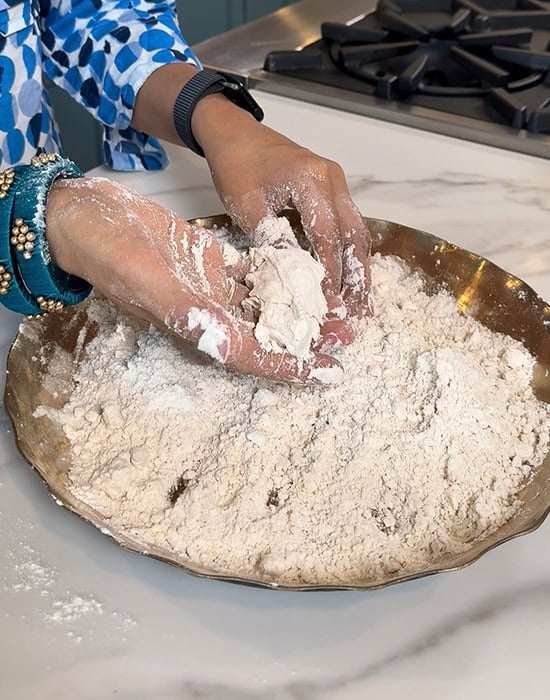
- Make a stiff dough
The samosa dough should not be soft. And once you knead it to a stiff dough, cover it with a cloth and let the dough rest for 30-40 minutes.
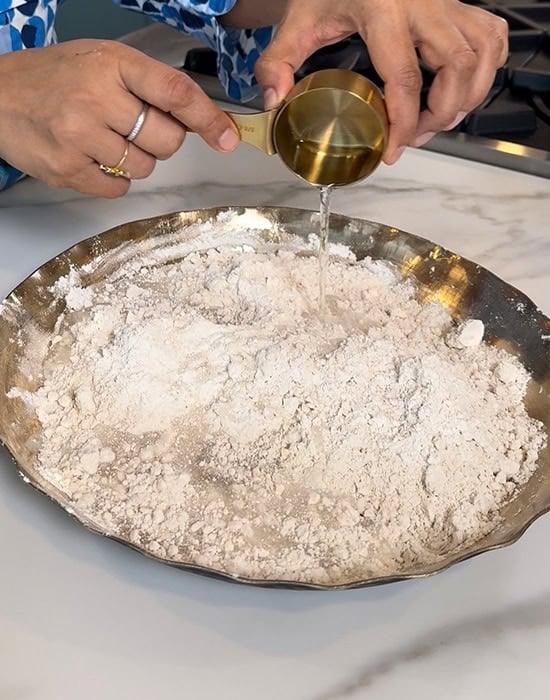
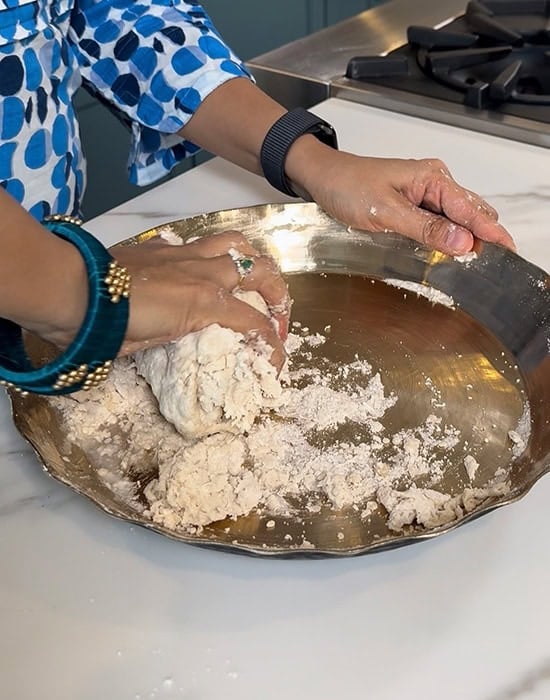

- Boil and mash potatoes
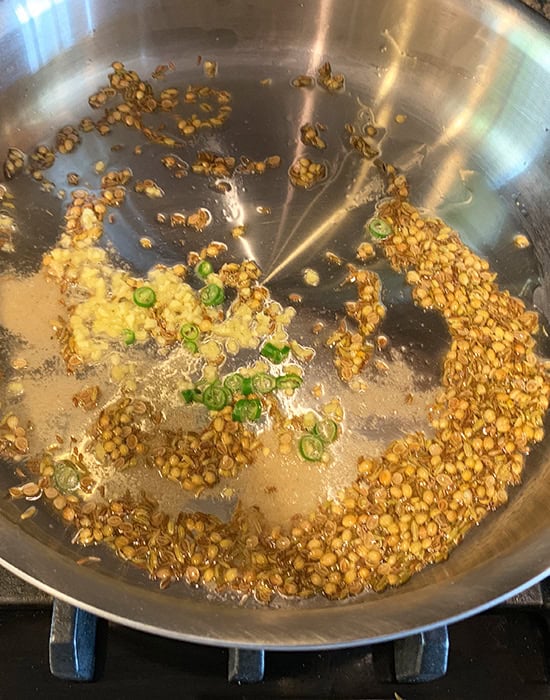
First boil the potatoes and then mash them. Then start working on the samosa filling, first crackle the cumin seeds, then add crushed coriander seeds, ginger and chopped green chili.
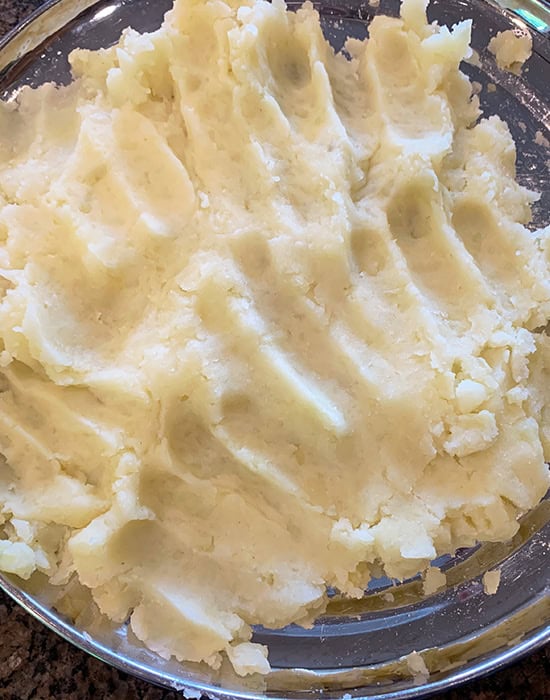
- Finish making the samosa filling
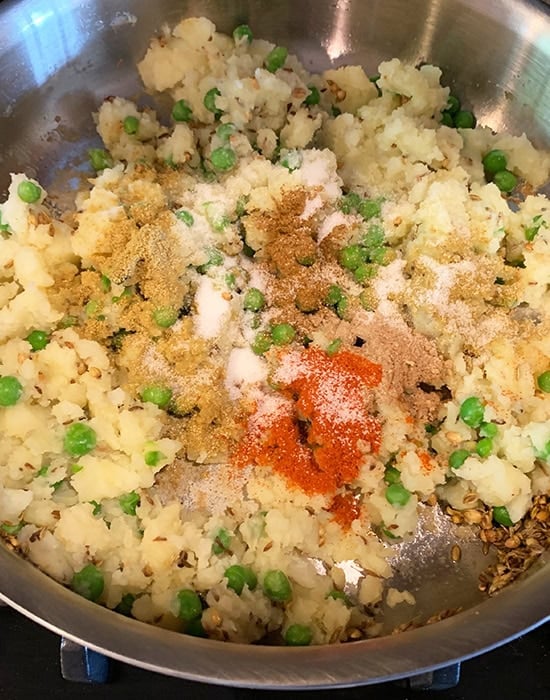
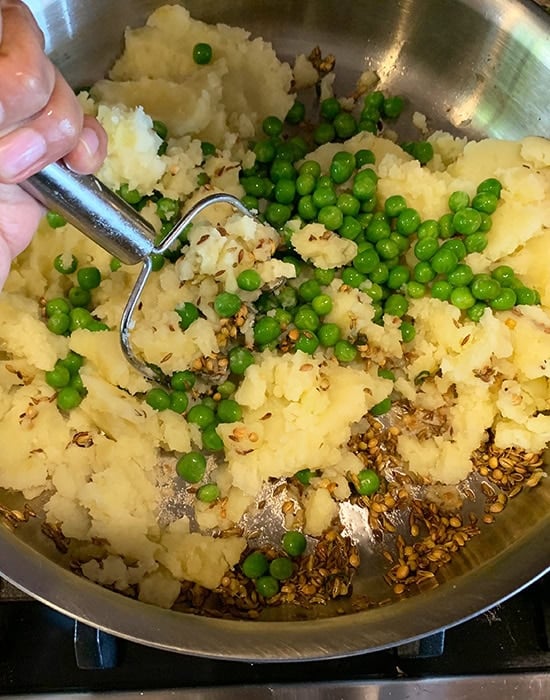
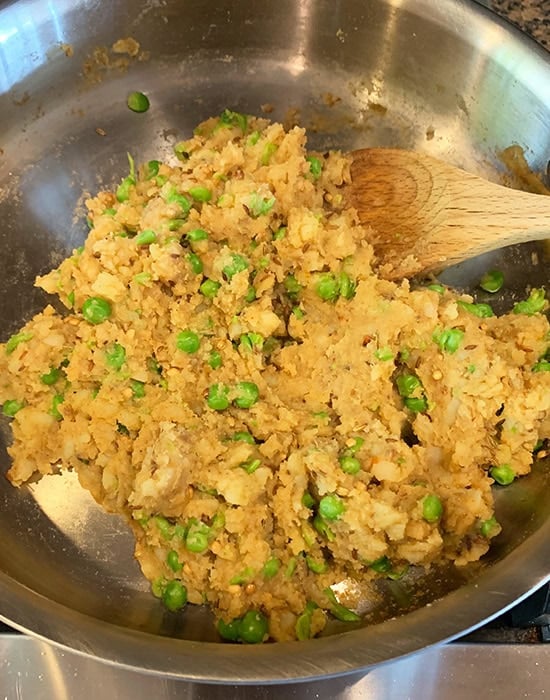
Once the seeds crackle, then add the mashed potatoes along with green peas and ground spices like chili powder, coriander powder, amchur, and garam masala.
- Divide and roll samosa dough
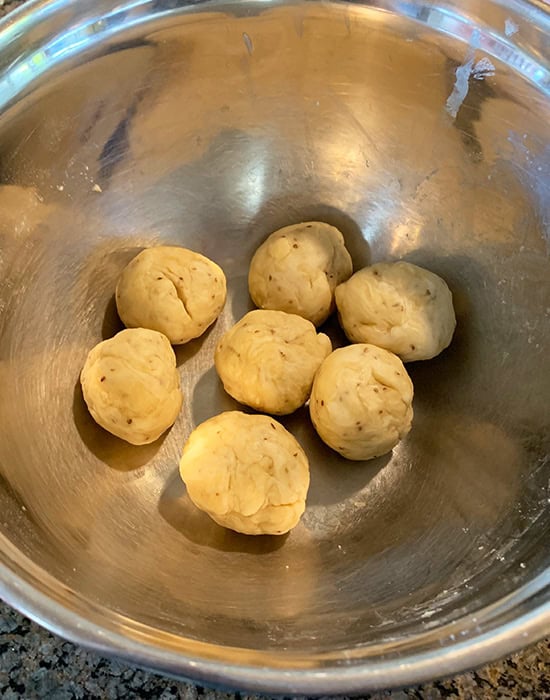
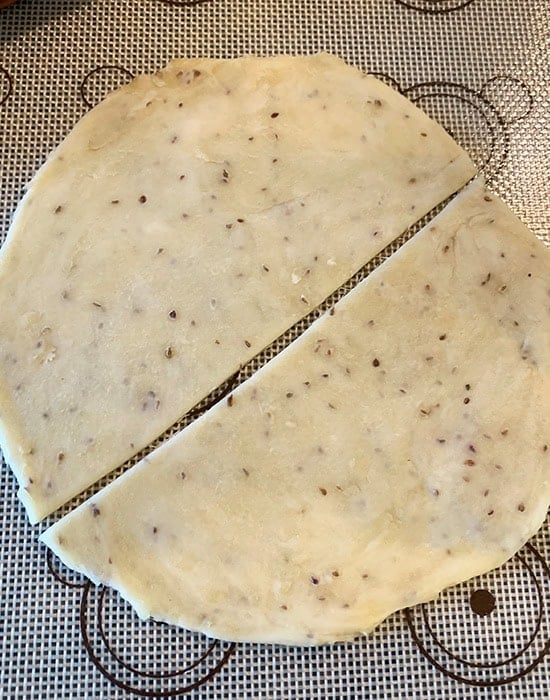
Divide the prepared dough into 7 equal parts of 58-60 grams each. Then roll each ball into a circle (start with 1 dough ball) and cut into half. You are going to make samosas with each half.
- Shape the dough into a cone shape
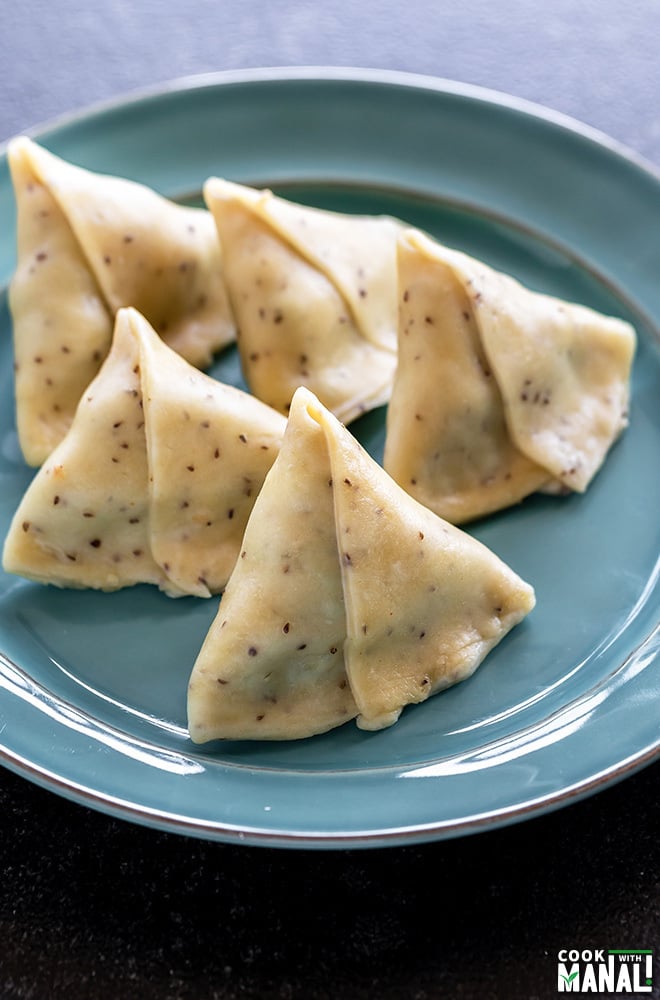
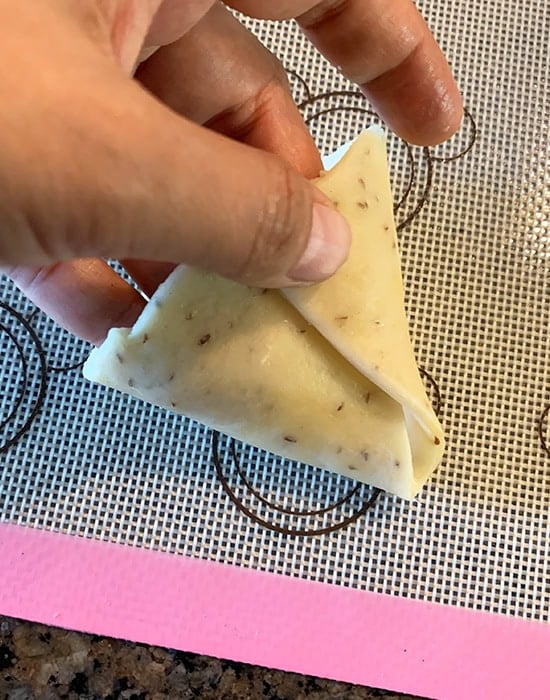
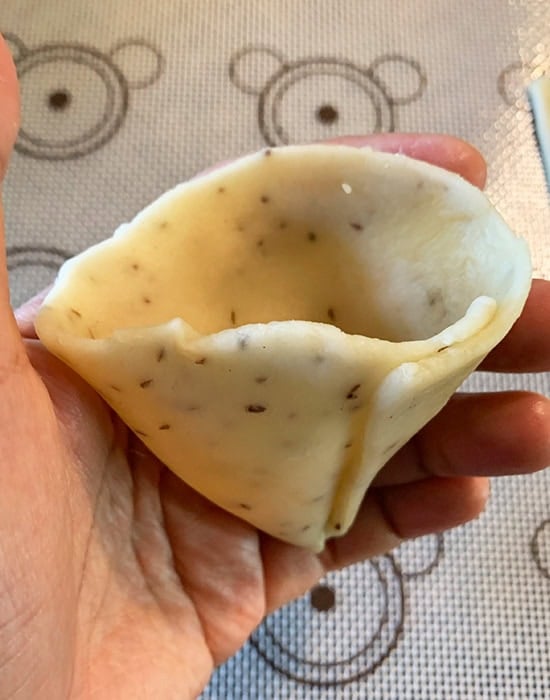
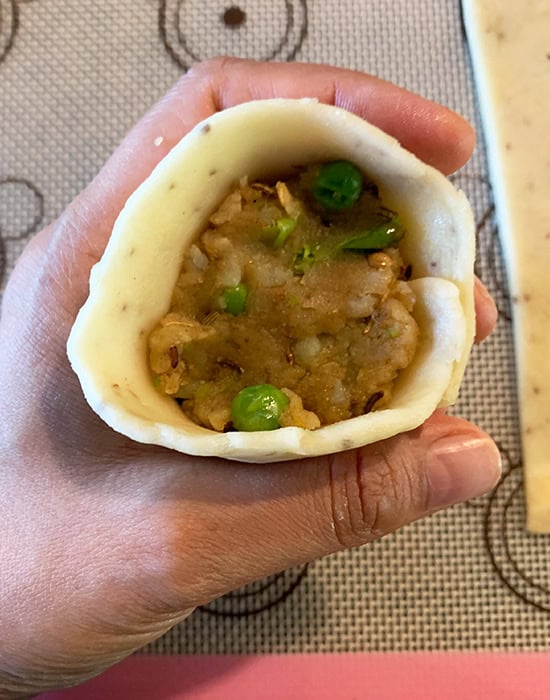
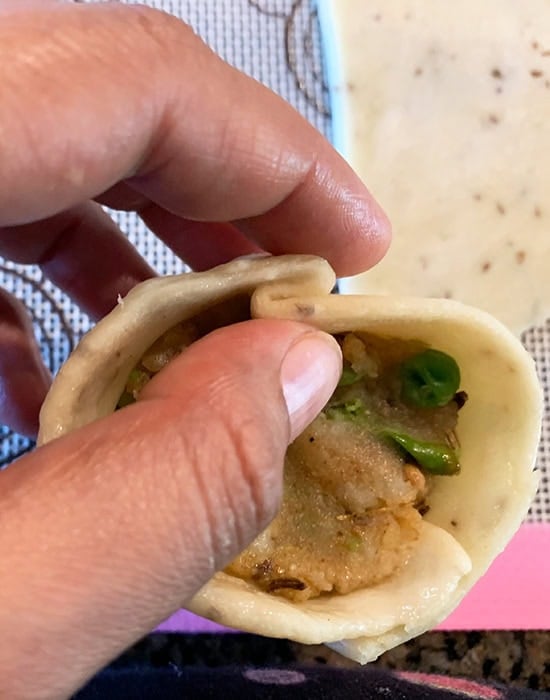
Apply water to seal the edges and then fold as shown in the pictures by bringing the two edges of the flat side together. Pinch and seal to bake a cone.

- Fill the samosa
Fill the samosa now with the prepared filling but do not overfill.
- Seal the samosa
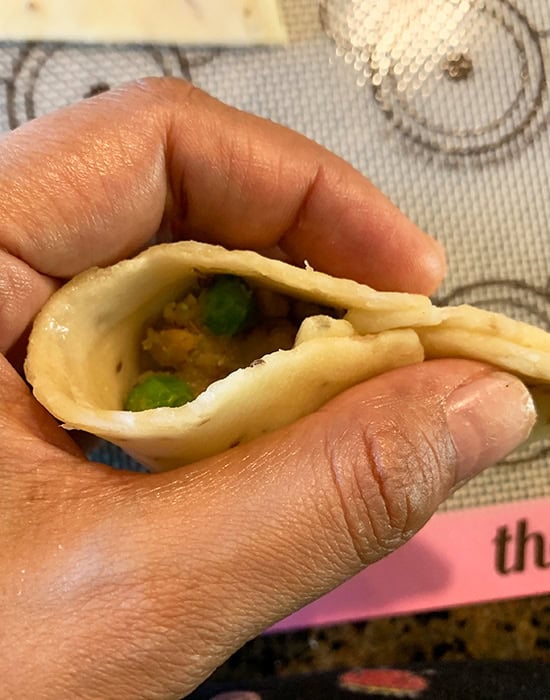
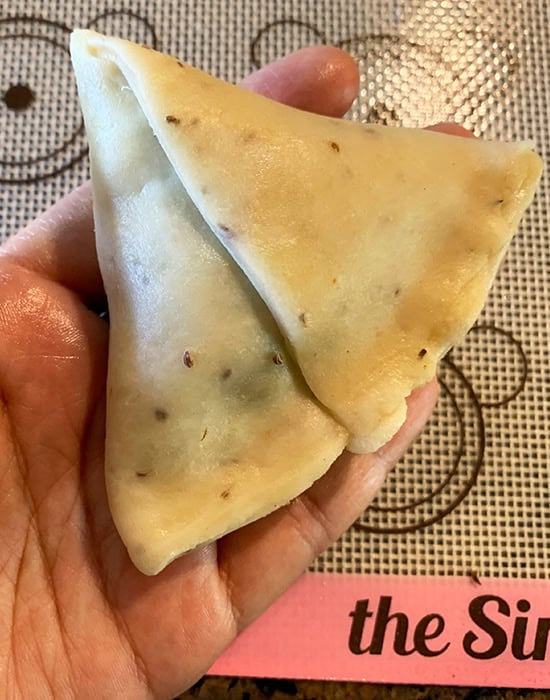
And make all the samosas similarly. Keep them covered with a cloth to prevent them from drying.
- Deep fry in oil on low heat
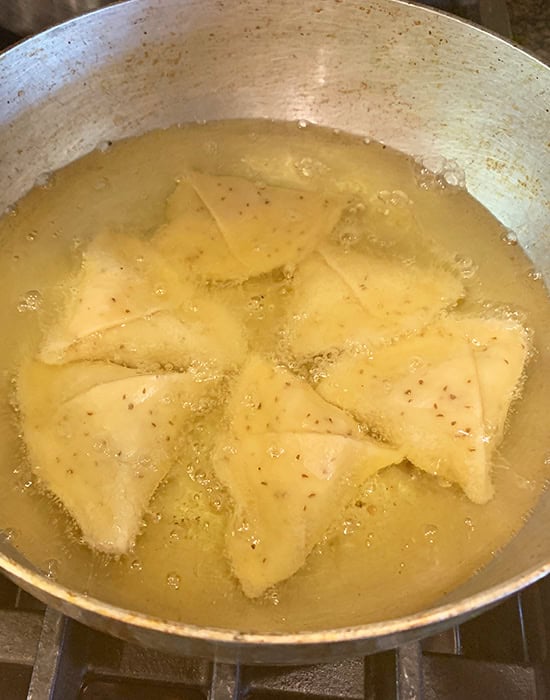
It is very important to fry on low heat for crispy samosa. Fry until they are crisp golden brown.

Can I Bake Samosas?
Yes, you can definitely bake these samosas. Line a large baking sheet with parchment paper and then place the samosa on it. Brush the samosas with oil and then bake at 350 F degrees for 30 to 35 minutes or until browned.
Leftover Samosa Ideas
If you have leftover samosas, you can use them in different ways. Like make, Samosa Chaat where you pair the samosas with chole and chutneys.
You can also make Samosa Sandwich, apply chutneys on bread and place a samosa in between. You can even put some sev on top and enjoy.
How to Make Homemade Samosa (Crispy & Flaky!)
Ingredients
Samosa Dough
- 2 cups all purpose flour (maida), 260 grams
- 1 teaspoon ajwain, carom seeds
- ¼ teaspoon salt
- 4 tablespoons + 1 teaspoon oil, 65 ml
- water, to knead the dough, around 6 tablespoons
Samosa Filling
- 3-4 medium potatoes, 500-550 grams
- 2 tablespoons oil, I used avocado oil
- 1 teaspoon cumin seeds
- 1 teaspoon fennel seeds
- 2 teaspoons coriander seeds, crushed
- 1 teaspoon finely chopped ginger
- 1 green chili, chopped
- ¼ teaspoon hing, asafoetida
- ½ cup +2 tablespoons green peas, I used frozen green peas which I soaked in warm water for 10-15 minutes before using
- 1 teaspoon coriander powder
- ½ teaspoon garam masala
- ½ teaspoon amchur, dried mango powder
- ¼ teaspoon red chili powder, or add more to taste
- ¾ teaspoon salt, or to taste
oil, for deep frying
Instructions
Make Samosa Dough
- Start by making the samosa dough. To a large bowl, add 2 cups flour (260 grams), 1 teaspoon ajwain and ¼ teaspoon salt. Mix well using a wire whisk or your hands. Add 4 tablespoons +1 teaspoon oil (65 ml) to the bowl and then start mixing the oil into the flour.
- Rub the flour with the oil using your fingers until the oil is well incorporated into the flour. Do this for 2 to 3 minutes, you don’t want to rush this step because this will make your dough crispy.Once the oil is incorporated, the mixture will resemble crumbs. Press some flour between your palm- it should form a shape (& not crumble) – that means oil is enough and well incorporated.
- Now, start adding water, little by little and mix to form a stiff dough. I used around 6 tablespoons water here, but it can vary. The dough needs to be stiff and not soft. Don’t knead the dough much.
- Cover the dough with a moist cloth and let the dough rest for 40 minutes. I usually soak a paper towel in water and then squeeze out all the water and then cover the dough with that. While the dough is resting, start working on the filling.
Make the potato filling
- Boil 4-5 medium potatoes (500-550 grams) until done- 8 to 9 whistles on high heat with natural pressure release if using stove-top pressure cooker or if using Instant Pot, add 1 cup water to the steel pot and then place a trivet inside, place the potatoes on top of the trivet and cook on high pressure for 12 minutes with natural pressure release.Once the potatoes are boiled, let them cool down a little and then carefully peel the skin of the potatoes and mash them using a potato masher. Set them aside.
- Now, heat 2 tablespoons oil in a pan on medium heat. Once the oil is hot, add 1 teaspoon cumin seeds, 1 teaspoon fennel seeds and 2 teaspoons coriander seeds (crushed using mortar pestle).Let the seeds sizzle for few seconds and then add 1 teaspoon chopped ginger, 1 green chili (chopped) and ¼ teaspoon hing. Cook for 1 minute.
- Add the boiled & mashed potatoes to the pan along with ½ cup + 2 tablespoons green peas to the pan. Turn heat to low-medium.Then add 1 teaspoon coriander powder, ½ teaspoon garam masala, ½ teaspoon amchur, ¼ teaspoon red chili powder (or to taste), and ¾ teaspoon salt (or to taste).
- Mix everything together using a spatula. I use my potato masher to combine the spices and seasonings well with the potatoes and peas.Once everything is well combined, remove the pan from heat and let the filling cool down a bit.
Shape & fry the Samosa
- Once the dough has rested, give it a quick knead and then divide the dough into 7 equal parts of around 58-60 grams each.Take one piece of dough and roll it into a thin circle, around 6 to 7 inches in diameter and 1/16 inch (or less) thickness, then cut the dough into two equal parts. Keep the remaining dough always covered with a moist cloth else the dough will dry out.
- Take one part of the cut circle and apply water on the straight edge/side. I usually mix some flour with water so that it forms a nice glue.Now bring the two ends of the straight edge together and pinch them to form a cone. Refer to step by step pictures in the post for a graphic representation which might be helpful. Pinch the pointed ends to make it a perfect cone shape.
- Fill the samosa with the prepared potato filling, around 1 to 2 tablespoons. Don’t overfill the samosa.Now again apply water all around the circumference of the cone as you must seal it. Pinch the opposite side (side opposite to where you pinched to form the cone) to form a plate (refer to step by step pictures in the post). Then pinch the edges and seal the samosa.
- Your samosa is now ready. Repeat with remaining dough and make all the samosas similarly. Always remember to keep the filled samosa covered with moist cloth while roll and fill the others.
- Now heat oil in a kadai on low heat (around 285-300 F). To check if oil is ready, drop a small piece of dough into the oil, it should take a few seconds to come up to the surface. That means the oil is ready. Or use a kitchen thermometer if you have one.
- Drop the shaped samosas into the oil. Fry on low heat. After around 10-12 minutes, the samosa will become firm and light brown in color. At this point, increase the heat to medium (around 350 F) and fry until it gets nicely browned.Don’t overcrowd the kadai/wok, fry 4-5 samosas at a time. And each batch will take around 15 to 20 minutes since we fry on low heat so be patient.
- Once you finish frying one batch, lower the heat again to low and wait until the temperature of the oil drops and then add the second batch. If you fry samosa on high heat, they will not get crispy and the dough will remain uncooked so regulating the oil temperature is crucial while making samosas.Fry all the samosa and then enjoy them hot with chutney!
Notes
- Can I Use Whole Wheat Flour?
- How to Store and Re-heat Leftover Samosas
- How To Freeze Samosas
Nutrition
Nutrition information is automatically calculated, so should only be used as an approximation.










I had potato mixture left over so I grabbed a couple of rolled pie crusts from my fridge. I unrolled them, sprinkled them with ajwain carom seeds, just like Manali did, cut pieces of pie crust into shapes like Manali did for her samosas, filled them with potato mixture, sealed them with the flour and water mixture, and fried them. They weren’t as yummy as Manali’s but they were good and none of the yummy potato/pea mixture was not wasted!
glad you enjoyed the filling Beverly! using pie crust is a quick way to enjoy the same flavors!
I’ve failed at samosas before (especially the crust). I wasn’t going to make another attempt unless I found a promising recipe. Your photos drew me in. But the detailed notes and recipe are what gave me the confidence to not just attempt it, but go in for a double batch in one fell swoop.
I really appreciate the weight measurements from flour and potatoes, right down to dough ball size. Thank you!
As for results: so so good! Filling flavor was exactly as from my home town stalls. 😍 Recipe was spot on in terms of yield. I had just a little bit of filling left over, but likely due to not filling consistently. The crust did not get bubbles, or go soft. I will probably add a touch more salt in the dough next time. I must have overworked the dough a little as the crust wasn’t as flaky as I expected and was a little hard. Will heed that warning next time.
Kudos for a very well written recipe!
Thanks Nivedita for trying the recipe, glad you liked it!
I love making this dough ! so easy and very tasty
My first try at a somosa, am now making in big batches and freezing them. great recipe and instructions.
Hi, can you use virgin olive oil instead of vegetable oil in this recipe?
yes
The dough says 4 Tablespoons + 1 teaspoon oil. Then 45 ml + 5 ml. I was confused because 4 Tablespoons is 60 ml. I split the difference and went with 60 ml oil… hoping my dough turns out. Please amend the recipe to the right conversion.
it is 60 ml, I will fix the typo. Your dough will be fine, don’t worry
thanks Manali,
I learn perfect to making samosha. 😀
Hi Manali,
Your recipes are excellent!
Is is possible to make the samosa dough in a food processor or is rubbing the flour with the oil by hand essential?
Thanks,
Lindsay
you can use a food processor. rubbing oil into the flour by hands is a traditional way of incorporating oil into the flour well so that the dough turns out crispy. I always do that and it hardly takes 2 minutes but if you want to use food processor, go for it 🙂
Thanks Manali for sharing recipe and important tips for perfect Samosa .
Hi Manali, I would like to know if I have to freeze uncooked samosas do I need to thaw them before frying .
Thanks
I would fry straight from the freezer
Oops, I forgot to include a recipe rating in the comment I just posted! If I could give 10 stars–or a whole constellation of stars–I would!
Thanks Kathy! so glad you enjoy them!
These are great! A little time consuming but worth it! Thank you for sharing. 😊
Homemade samosas have been one of my favorite pandemic cooking projects. Your directions, tips, and photographs have made everything super clear and now my friends ask me to make samosas for their birthdays 🙂 Thank you so much!!!
Thanks for trying Kathy!
Hi really liked the recipe and planning to make it. I was wondering whether I can use phyllo dough or anything alternative to make the samosas?
yes phyllo dough or puff pastry will work
Excited to try this recipe this weekend!! Can I air fry the samosa? How would i do that?
sorry for the late response Monica, I was on a vacation. You can air fry them, try 350 F for 20 minutes and go from there.
just do it
I can’t wait to make these! Thank you for sharing your cultural culinary treats with the world! Leila
Manali, your recipe is superb love that everything is being detailed so no chance of error. Thanks so much.
glad you like it Rita
Sounds delicious! I just bought some frozen samosas (yes, I know it was silly of me), and will make some filling to improve them. One question (or possibly two), is there a substitute for amchur, or will it matter a lot if it is omitted? I have everything else. I make peanut sauce as an accompaniment , but must check out the cilantro chutney – yum.
you can squeeze lemon juice in place of amchur, it adds to the tanginess.
Can I freeze fried samosas?
you can but better would be to freeze them uncooked but you can of course freeze cooked one. Let them cool completely then freeze.
Nice description but it does go on and on and on… Exited to try it as I finally got to the recipe ! 😋
you can press “jump to recipe” button at the top , it takes you straight to the recipe. there are lot of important tips when it comes to making samosa and I like including them in post since they help many and hence the long post. If you just want the recipe, there’s the “jump to recipe” button.
Really? Someone goes to all the effort to produce a great guide on how to make these little beauties, adding their experiences and suggestions about how to get the best results for our own efforts, all for free, and all you can is moan about the fact it took you too long to read when you could have scrolled to the bottom in 6 seconds???
Great recipe Manali, and I for one enjoyed reading the steps and love the photos, all of it helped when making my own, my parents came around for dinner and my father loves Samosa, and also Chapatti/Roti, I made both, along with a couple of curry dishes and rice dishes, served with some chutneys and onion salad.
Thank you
Thanks Jivika, glad to know!
I abslutely agree good recipe and self explanatory .👏🏻👍🏻
I enjoyed the commentary an appreciate the backstory and sentiment you shared with us. It added authenticity. Thank you!
Thanks!
Delicious and authentic! Thoroughly enjoyed, thanks for sharing a great recipe!
like the recipe! just one thing….. 4 Tbls = 60 ml.
These are so delicious and satisfying, thank you for the wonderful recipe!
I baked these rather than fried (following directions from your baked samosa recipe) and they turned out surprisingly well. Brushed with plenty of olive oil and flipped halfway through. I’m sure they’d taste even better fried, but in case anyone else is wondering they’re totally worth baking if that’s your only option.
I’ve made these twice so far and they’ve turned out perfectly both times. Thank you for the lovely recipe!
welcome Jenifer!
Hi there, what oil would you suggest? Thank so much
any neutral oil like avocado oil, canola oil. vegetable oil can be used to fry the samosas.
This is the first time my samosas have turned out so perfectly!! Amazing recipe manali🤩
yay! 🙂
I really appreciate all the details, photographs, and care taken in this recipe. I’ve made samosas four times now, with more and more confidence. (That bit of adjwain and the amchur make a big tasty difference!) Thank you so much!
Thanks Kathy, appreciate the kind words!
Hi Manali, I would like to make these samosa’s for Rakhi tomorrow night. Two of the guests are gluten intolerant. How could I make this recipe gluten free? Will it still taste as yummy? Thank you, Emma
Hi Emma, try with 1:1 gluten-free flour. Sorry I personally have not made gluten-free samosas so I have little experience here but many of my readers say that 1:1 flour from Bob’s red mill works well for most recipes so you can try that.
Thanks manali, your recipe was of great help to me
glad to know!
Can you give an idea of what the optimal temperature the oil should be for frying the samosas? You say low heat is best but that can vary a lot on what the oil temperature could be. Thanks much!
I would say around 320 F
is the nutrition for one samosa?
yes and it’s just an estimate calculated automatically by a recipe plugin that I use. Please consult a nutritionist for accurate values.
What is a whistle you need 8 or 9.
traditional stove-top pressure cookers in India have whistle which blow once the cooker comes to pressure, number of whistles depends on the size of potatoes. You can also microwave, steam or cook potatoes in Instant pot. Ultimately you need cooked potatoes 🙂
After frying, can I freeze? If yes, how should I re-heat the samosas. Thank you – cindy
air fryer or oven will work best for re-heating, you can also freeze before frying after you shape them.
I have tried many samosa recipes. Never satisfied with any of them. Yours are exceptional. The tips you gave brought d samosa to a higher level. Yours were d only samosas I made that were super flaky, crispy and without bubbles. A friend commented that they were as good as a famous Indian restaurant in Penang, Malaysia, n they were not oily unlike d restaurant. I did your green chutney too. A match made in heaven! Thanks so much for d excellent recipe Manali.
Thanks for the lovely feedback Catherine! 🙂
Hi Manali,
Your recipe is very precise and very clear to the readers..you make an excellent teacher…I like the accurate dos and don’ts like not frying in hot oil ..and the dough not being soft..keep it up!
Thank you Amenla for your kind words 🙂
Hi Manali
Thank you so much this is very clear,much appreciated keep it up
These taste so good and are so flaky. They never last long!
How do I keep the side seams from opening while frying? I’ve used the water/flour mixture and pressed firmly but I always have couple that open. Help!
if it’s only a couple, I wouldn’t care so much. Seal them with water-flour mixture and then use a fork to crimp up the edges. glad you like them!
can these be air fried?
I am sure they can be!
Thanks for recipe. Do you use cold or hot water for the dough?
room temperature is fine
Well illustrated will try the method
What are a few of the best options for oil? And where do you find hing and amchur? Thanks!
you can fry in avocado oil or vegetable oil. Hing and amchur are easily available at Indian grocery stores or you can also find them on amazon.
can you cook these in the oven?
375 F for 40-45 minutes
You’re the best thank you so much
Manali, have you made a cookbook, if not please do? If yes, what’s the name?
You are super 🙂 Love your recipe
Thanks Martin for your kind words :)! Yes I do have a cookbook, it’s on Instant Pot recipes! You can read more about it here: https://cookwithmanali.com/cookbook
They came out great! Wonderful instructions. The pictures are so helpful.
glad to know Kari, thanks for the feedback!
Hello,
Please share recipe for matar samosa😊
sure 🙂
sure
Hello, if i want to bake it, do i need to brush the samosa all over with oil or just oil the pan?
Thank you.
you will have to brush the samosas
Hello, I want to make these a couple days in advance.
Would you suggest to cook fully in advance and then re-heat in oven?
Or freeze the filled un-cooked samosa, and then cook fully later?
And if so, and I follow your advice to place filled samosa on parchment paper and freeze, then put in baggie in freezer til use, what are the instructions afterwards when I want to cook? Do I thaw them first? Go straight to oven or oil with frozen samosa? Or maybe a certain temp in oven to thaw before increasing heat?
New to this kind of cooking, thank you!
Advice is much appreciated, thank you!
yes you can make fully in advance and re-heat on air fryer or oven. Air fryer works really well. If you freeze them, take them straight out of the freezer and fry in oil, there’s no need to thaw them.
I’m a student and tried making this on one of my broke days lol. with leftover rice for filling. It’s a good recipe, well explained but for some reason the pastry absorbed alot of oil, and while it all held together it was more biscuit like and crumbly, falling apart when I ate it. Any advice?
pastry absorbing lot of oil means oil was very lukewarm, needs to on medium heat for this recipe but shouldn’t be that low else pastry will absorb oil
What temperature is your oil at low temperature?
I haven’t measured using a thermometer, but between 250 & 300 F should be okay
Can you bake them instead of fry?
Try at 375 F degrees for 45 to 50 minutes
Do you have a preference for oil? You don’t specify which you use?
You can fry in canola oil
I have a question. If I want to put the leftover Samosa in the freezer, should I fry the samosa first or not? Then how long it will be last in the freezer?
You can freeze half fried samosa, that might work better. Fry until they get little coating, then cool completely. Place on a tray and put in the freezer until they become solid and then transfer to freezer back. When you want to eat them, fry into hot oil until golden brown. You can also freeze fully cooked samosa. They should be okay for 2 to 3 months.
Hi Manali,
I was wondering if there are any substitutes for carom seeds?
Thanks
skip!
Tried this samosa recipe and it turned out so good. Thank you for explaining so clearly and simply. Best samosa recipe ever 👌😊
glad to know Shalini!
This is an outstandingly good recipe! I will definitely be making this again. In future, I will try substituting the dried mango powder (amchur) with either sumac, hibiscus or dried pomegranate and see which one I like best. Thank you for introducing me to this dish! It is simple enough but the flavours are sublime.